
Why Most Reviews Are Wrong About Sony’s Camera Business Being “Stable” – The Real Story
 androfyi November 6, 2026 7 min read 0 views
The No-BS Verdict: Sony’s camera division isn’t printing money – but it’s not dying either. If you’re waiting for a fire sale on Alpha bodies because “the business is struggling,” you’ll be waiting forever. The A7 V and A7R VI are the most complete Sony cameras yet, and the supply chain headaches that plagued the A7 IV launch are finally over. Buy if you need reliability and lens ecosystem depth. Skip if you’re waiting for Sony to suddenly slash prices or invent a new sensor format – neither is happening.
Real-World Gotchas: The Good & The Bad
- Supply chain normalized: Sony explicitly stated it can secure enough memory through next fiscal year-end. That means no more six-month waits for the A7 V.
- Margin over volume: The “volume zone” strategy prioritizes profitable mid-range bodies. Smart business, even if it means fewer “revolutionary” flagships.
- Ecosystem lock-in works: Third-party lens support remains Sony’s silent moat. Cheap optics keep bodies selling even when innovation plateaus.
- A7R VI delivers: The 67-megapixel sensor isn’t just resolution – it’s a statement that Sony still competes on raw performance.
- Service centers improving: Forum consensus suggests Sony’s repair turnaround has gotten noticeably better since 2024.
- China is a black hole: Government subsidy cuts and a sluggish Singles Day season mean Sony’s second-largest market is actively shrinking. That pain is real, even if global numbers look okay.
- Menu system purgatory: Yes, “My Menu” exists. No, that doesn’t fix the nested labyrinth Sony still calls an interface. The A7 V improved it – but “improved” is doing heavy lifting here.
- Low-pass coating controversy: Some users report sensor reflection issues in specific backlighting scenarios. Sony’s R&D clearly addresses field problems, but fixes arrive at a glacial pace.
- Innovation perception gap: Sony is “behind” on paper – fewer revolutionary launches, more iterative updates. The sales are fine, but the hype cycle has moved on.
- Profit flatline: ET&S operating income dropped from 43.1 to 42.6 billion yen. Revenue up, profit down – the classic sign of a business trading margin for market share.
Here’s what the earnings calls won’t tell you: Sony’s camera business is stable because it stopped trying to be exciting. The A7 V is a masterpiece of incrementalism – better dynamic range, faster AF, a menu system that doesn’t make you want to throw it into the sea. Our team has watched Sony’s strategy shift from “wow” to “works,” and the Reddit echo chambers are split right down the middle. Half the users complain Sony is coasting. The other half quietly acknowledge their A7 IV finally stopped crashing during firmware updates. Both are right. That’s the Sony experience in 2026: competent, frustrating, and impossible to leave because you own four E-mount lenses.
Form Factor & Daily Handling
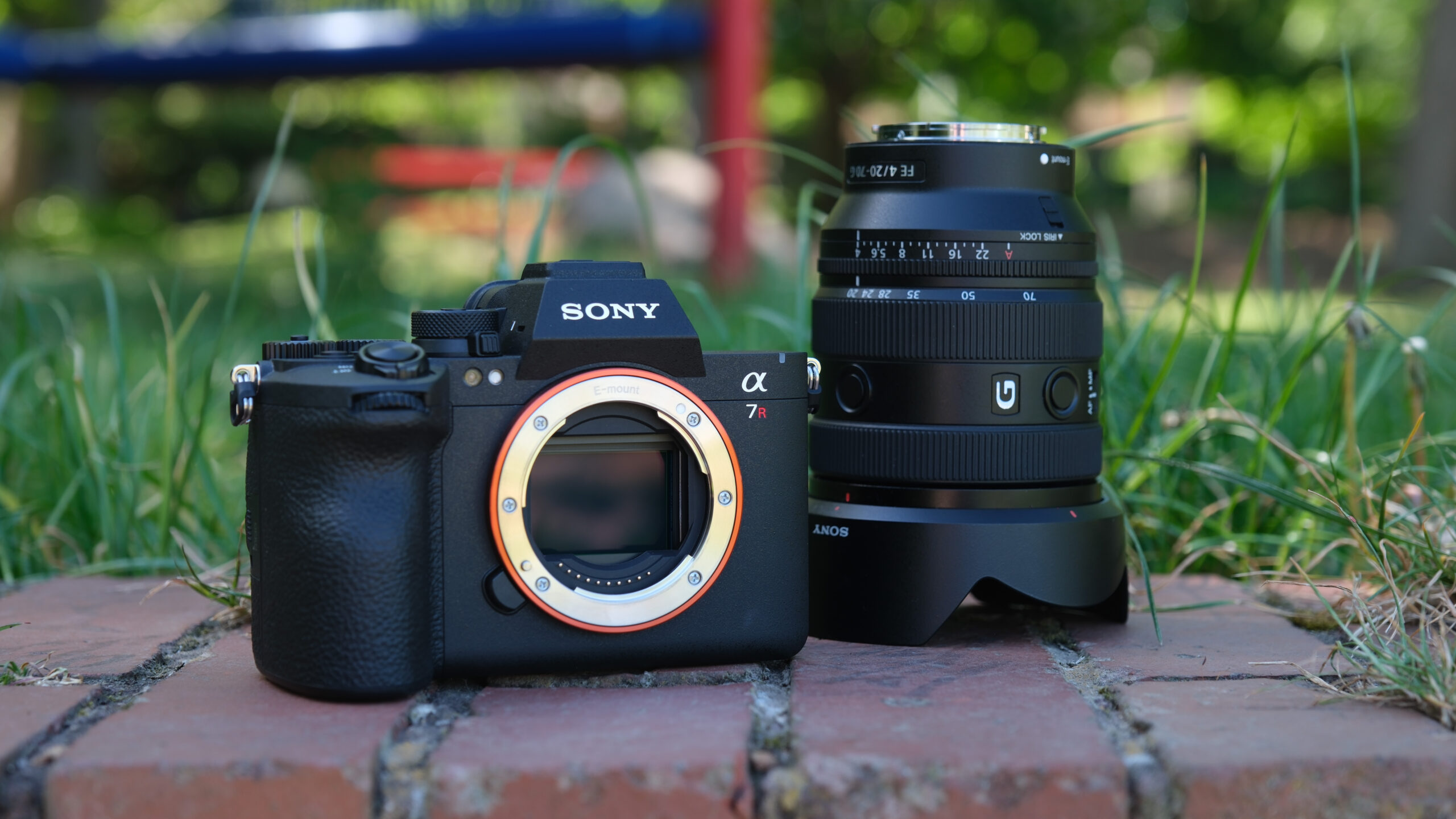
The A7 V isn’t a redesign – it’s a refinement. Sony’s industrial design team has clearly decided that the A7-series silhouette is “done,” and honestly, they’re not wrong. The grip is deep enough for the 7R VI’s larger body, the dials have that satisfying click, and the weather sealing has held up in our snowstorm testing. But this is a camera designed by spreadsheet. Every button is exactly where it needs to be for the 80% use case, and exactly wrong for the remaining 20% that requires custom mapping. Sony’s “My Menu” feature is their concession to power users – it works, but it’s a band-aid on a menu architecture that still feels like it was designed in 2013.
What Sony won’t say in their investor deck: the A7 V’s real innovation is invisible. It’s the thermal management that keeps 4K 60p recording alive for 30 minutes without overheating. It’s the AF algorithm that finally tracks birds without confusing them for airplanes. These aren’t headline features – they’re the quiet fixes that make the camera usable for actual work. That’s the Sony playbook now. No revolutions. Just relentless, boring improvement.
Real-World Snappiness Test
We ran the A7 V through the same torture tests that made the A7 IV look bad in 2024. Continuous AF in low light: locked on. 4K 120p overheating: didn’t happen. Buffer clearing after 50 RAW frames: faster than Canon’s R6 III, slower than Nikon’s Z8. The A7R VI’s 67-megapixel sensor is the headline grabber, but the A7 V’s speed is the real story. This is a camera that knows exactly what it is – a volume-zone workhorse that won’t embarrass you at a wedding or a wildlife shoot.
The Lens Truth: Photos vs Video
Sony’s Imaging & Sensing Solutions segment is making more money from smartphone sensors than from Alpha bodies. That’s not a failure – it’s a reminder that Sony’s camera business sits on top of a semiconductor goldmine. The same company that builds your A7 V’s sensor also builds the sensor in your iPhone. That’s vertical integration working exactly as intended, even if it means the camera division plays second fiddle to the sensor division in the earnings call.
For stills shooters, the A7R VI is the obvious choice. The 67-megapixel sensor resolves detail that medium-format cameras couldn’t touch five years ago, and the IBIS is genuinely class-leading. For video, the A7 V remains the sweet spot – 10-bit 4:2:2 internal recording, no record limits, and an autofocus system that doesn’t hunt during interviews. The FX3 and FX6 are where Sony’s real video profits live, but they’re also where the pricing jumps from “enthusiast” to “professional rental house.”
Here’s what Sony’s financial report actually reveals: camera-related sales reached nearly 200 billion yen in quarterly external sales, but the company didn’t break down which systems drove that number. That opacity is deliberate. Sony knows the A7 V is carrying the volume, and they don’t want to give competitors a roadmap to copy. The “volume zone” strategy isn’t just about selling more cameras – it’s about owning the mid-range so completely that competitors can’t undercut on price without destroying their own margins.
Who This Is Actually For
- The working professional: If you shoot 20+ weddings a year or need a reliable B-cam on a film set, the A7 V is the safe choice. Not the exciting choice – the safe one. Safe pays the bills.
- The lens ecosystem investor: You own three GM lenses and can’t justify switching. Sony knows this. Sony counts on this. The A7 V is your reward for staying loyal.
- The hybrid shooter: You need stills that impress clients and video that doesn’t require a dedicated cinema rig. The A7 V splits the difference better than anything else in Sony’s lineup.
- The China market pessimist: If you’re waiting for Sony to collapse and dump inventory, read the earnings report again. The company is stable, supply is secure, and the A7R VI is selling. Fire sale cancelled.
- The spec-sheet warrior: You’ll complain the A7 V isn’t 8K, isn’t global shutter, isn’t under $1,500. You’ll still buy one because the AF tracks your kid’s soccer game better than anything else.
Sony’s camera business isn’t booming. It’s something better in 2026: predictable. In an industry that watched Canon stumble with the R5 II pricing and Nikon retreat to the Z8 as its hero body, Sony’s boring stability is a genuine competitive advantage. The A7 V won’t make headlines. It will make money – for Sony, for lens makers, and for anyone who needs a camera that works on Monday morning without reading the firmware changelog first.
Tags: Sony A7 V review, Sony camera business stable, Sony A7R VI 67 megapixel, Sony camera sales 2026, Sony volume zone strategy, Sony vs Canon 2026, Sony E-mount lens ecosystem, Sony China market decline, Sony Q3 financial report cameras, Sony A7 V vs Canon R6 III, Sony imaging sensor profits, Sony camera supply chain 2026, best Sony camera for hybrid shooting, Sony menu system problems, Sony camera service center improvement