DJI Mavic 4 Pro drone review Long-Term Reality Check: 30 Days Later
 androfyi November 1, 2026 7 min read 0 views
Most drone reviews read like spec-sheet poetry written by people who unboxed the thing yesterday. We’ve been flying the Mavic 4 Pro through rain, wind, and Colorado’s fall colors for weeks now. The hype said “incremental upgrade.” The reality? It’s a drone that quietly deletes every frustration you didn’t realize you had, while introducing a few new ones nobody warned you about. Here’s what actually matters after 30 days of daily abuse.
Ergonomics & The Physical Reality: Materials & Grip
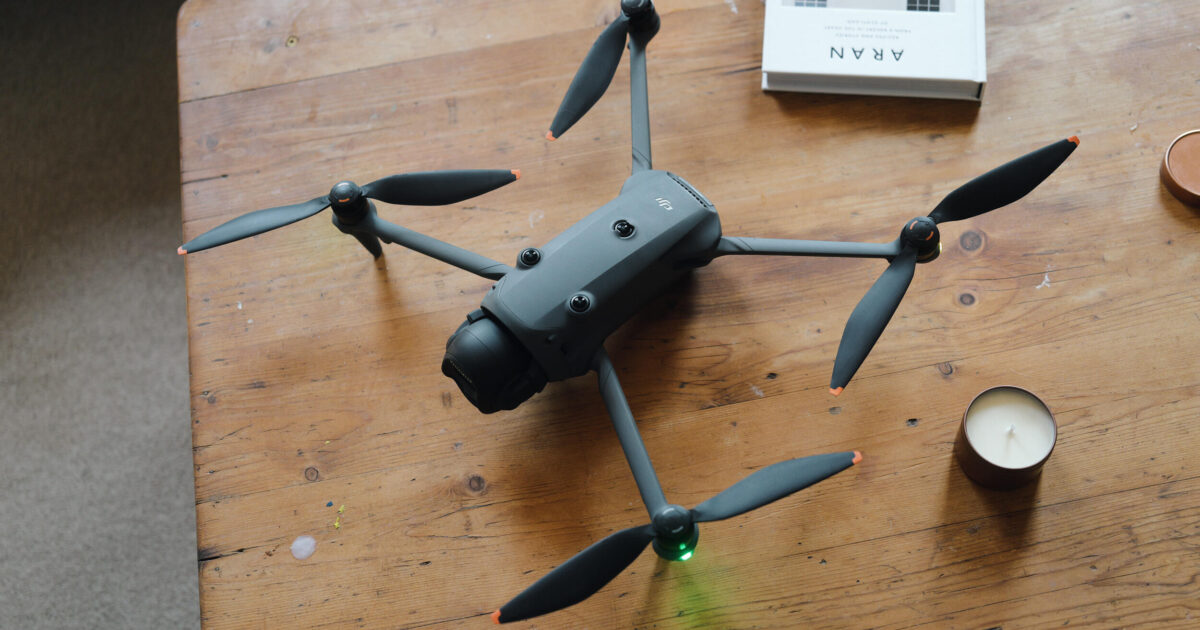
DJI made a choice with this generation: they stopped apologizing for size. The Mavic 4 Pro is bulkier than the 3 Pro, and they know it. At 1065 grams, this thing has presence in a way that makes the Air series feel like toys. During extended hikes, that weight compounds fast. Three batteries, the RC Pro 2, and this airframe add up to a serious pack load. For anything over a two-hour difficult hike, we leave it home and grab the Mini 5 Pro instead.
But in the air, that heft translates to something you can feel immediately: stability. The drone feels planted. Arms unfold in any sequence, and the auto-power-on triggers the moment they lock. We’re talking about shaving actual seconds off your launch routine. When you’re racing fading light or a train crossing the Ben Franklin Bridge, those seconds matter.
- Power Sequence: Unfold arms, drone boots instantly. The RC Pro 2 does the same. No button hunting, no waiting.
- Folding Design: Redesigned arms and legs unfold without interference. Smooth and intuitive.
- Sensor Vulnerability: Obstacle avoidance sensors sit low on the belly. Hand-launching requires attention. Placing it on uneven surfaces is a scratch risk. We learned this the hard way.
- Noise Profile: Significantly quieter than previous Mavic generations. Deep hum, not screech. You barely hear it once airborne.
Living With It: Color Accuracy In Practice
The camera system on this drone deserves its reputation, but not for the reasons the 100-megapixel marketing suggests. That headline number is quad Bayer output resolving roughly 25 true megapixels. DJI won’t put that on the box. But here’s what matters: the actual image quality is the best we’ve ever seen in a folding drone. Period.
The 6K video output is outstanding. Shooting in D-Log or D-Log M delivers what DJI claims as 16 stops of dynamic range, and we can confirm it handles highlight retention and shadow recovery better than any non-Inspire platform we’ve tested. All three cameras record in D-Log with matched color profiles. We cut between the wide, medium, and telephoto cameras in post without fighting color shifts. That workflow advantage alone justifies the upgrade for working professionals.
Photos are equally impressive. For aerial photographers making money with their drone, this platform demolishes the Mavic 3 Pro, Air 3S, and Mini 4 Pro. Computational photography kicks in after capture, and the results speak for themselves. Sharpness peaks around f/4, with f/2.8 through f/8 all delivering usable results.
- Main Camera Focal Length: Now 28mm instead of 24mm. In tight shooting scenarios, we felt the squeeze. Capturing waterfalls behind foreground trees required backing up farther than expected.
- Vertical Mode Gimmick: The rotating gimbal delivers true 6K vertical footage, not a crop. For anyone creating content for YouTube and Instagram simultaneously, this is transformative.
- Vertical Mode Limitation: Gimbal tilt is restricted to 10 degrees up or down. Top-down shots are unavailable in vertical orientation. The drone also loses speed and braking responsiveness in this mode. Plan your shots carefully.
- Infinity Gimbal Hype: The much-publicized 400-degree rotation stops hard at its mechanical limit. It’s a party trick, not a production feature.
Under Load: Real-World Snappiness Test
DJI’s spec sheet claims 51 minutes of flight time and 97.2 km/h top speed. We measured 35 minutes in moderately windy conditions with a battery on its second cycle. Top speed of 90 km/h is achievable in Sport Mode, but obstacle avoidance and gimbal positioning frequently cap your velocity before you hit that ceiling. These are not complaints. They’re reality checks.
The drone’s responsiveness, however, is genuinely transformed. Menu navigation, mode changes, and camera switching are noticeably smoother than the Mavic 3 Pro. Cruise control, buried in the button customization menu, changes extended flight patterns entirely. The half-press shutter focus trick is something we never found in the documentation, but it’s been invaluable for precise compositions.
Signal reliability deserves special mention. We flew through thick tree cover and deep valleys in Colorado. Zero signal drops. Zero connection anxiety. After years of lost-link nightmares with earlier Mavic platforms, this reliability fundamentally changes how aggressively you can shoot.
- Sport Mode Reality: Disables obstacle avoidance but unlocks the drone’s true speed. The vertical speed is particularly aggressive at 22 mph downward. It actually feels like a dive.
Battery Math: The Creator Combo’s three batteries deliver real-world 35-40 minute flights each. We’re completing three flights per battery versus two with the Mavic 3. We stopped worrying about mid-shoot power loss.
Charging Convenience: USB-C charging worked from a car inverter in Costa Rica for five days straight. No issues, no strange warnings.
Inertia Management: The added weight means longer braking distances and slower longitudinal acceleration than lighter DJI platforms. The vertical mode exacerbates this significantly. We stopped a full-speed reverse input and the drone continued forward before arresting momentum.
The Friction Points
What Earns Its Keep
- Video Quality: Best video output from any non-Inspire DJI platform. 6K in D-Log M delivers cinema-grade latitude.
- Camera Matching: All three lenses share D-Log profiles. Seamless multi-camera edits in post.
- True Vertical Shooting: The rotating gimbal produces native 6K vertical footage. No cropping, no resolution loss.
- Connection Reliability: Rock-solid signal penetration. Dense forests and valleys pose zero threat to link integrity.
- Auto Power-On: Unfold and fly. Saves critical seconds in time-sensitive shooting scenarios.
- Noise Reduction: Significantly quieter than previous generations. Reduced auditory signature changes the shooting experience entirely.
- Charging Flexibility: USB-C battery charging from any source. Car inverters, power banks, wall outlets all work without proprietary hardware.
Where DJI Falls Short
- Vertical Mode Speed: The drone becomes sluggish and unresponsive in vertical orientation. Braking distances increase dramatically. Easy to crash near obstacles.
- Focal Length Narrowing: 28mm main camera versus 24mm on the previous model. Wide shots require more flight distance or compromise.
- Capture Interval in 100MP Mode: 10-second minimum interval makes Pixpro Waypoint grids impractical for tight aerial mapping requirements.
- Sensor Placement: Low-hanging bottom sensors are vulnerable during hand-landings and uneven surface placements.
- Learning Curve: New pilots face an expensive mistake platform. The RC2 simulator is strongly recommended before live flight.
- Inertia: Weight advantage in stability becomes a disadvantage in agility. Longer braking distances demand anticipatory piloting.
Critical Configuration Alert
Before your first flight, access the Gain and Expo settings in DJI Fly. Adjust the brake sensitivity slider immediately. The factory default allows excessive momentum carry during direction changes, particularly in vertical mode. We clipped a tree on our first outing because the drone continued forward despite full reverse input. This single adjustment prevents the most common crash scenario we encountered.
Additionally, map the C1 button to cruise control and configure a physical button for camera switching rather than relying on the touchscreen. These two changes alone transform the operational workflow from frustrating to fluid.
Tags: DJI Mavic 4 Pro review, Mavic 4 Pro long term review, DJI Mavic 4 Pro camera test, Mavic 4 Pro vs Mavic 3 Pro, DJI drone battery life reality, Mavic 4 Pro vertical mode limitations, best folding drone 2025, DJI RC Pro 2 controller review, Mavic 4 Pro flight time real world, drone obstacle avoidance review, DJI D-Log M dynamic range test, Mavic 4 Pro photo quality comparison, DJI drone signal reliability test, Mavic 4 Pro for professional photography, DJI Mavic 4 Pro hidden features.