Garmin Fenix 9 vs 9 Pro: First Look — Which One Should You Buy?
 androfyi September 9, 2026 8 min read 112 views
Disclosure: This post contains affiliate links. If you buy through them, we may earn a commission at no extra cost to you.
The No-BS Verdict: If you’re a weekend warrior who wants a gorgeous AMOLED screen and solid GPS tracking, the base Fenix 9 will save you a hundred bucks and you’ll barely miss anything. But if you’re the type who actually needs satellite SOS in the backcountry, wants the MIP Solar display that lasts for weeks, or simply refuses to wear a watch with a slower processor than its cheaper sibling, the Fenix 9 Pro is the only rational choice. Everyone else should wait for the Fenix 8 Pro price to drop even further.
Real-World Gotchas: The Good & The Bad
What Garmin Actually Got Right
- Storage & RAM: Both watches get 64GB of storage and 50% more RAM. This is a real internal spec bump, not just marketing fluff. You can load entire regions of maps and still have room for your music library.
- Software Parity: Garmin Epic Groups, improved stamina analysis with new stamina curves and zones, better rowing features, and improved navigation land on both models. The core experience is identical.
- Titanium Construction: The Fenix 9 Pro is the first Fenix device to sport a full titanium watch case using nano-molding technology. It’s reportedly at least 16% thinner than the Fenix 8 Pro while being more rugged.
- inReach Across All Sizes: For the first time, satellite connectivity is available in all three case sizes (43mm, 47mm, 51mm), not just the big-boy 51mm.
- Display Options: The Pro gives you a choice between AMOLED and MIP Solar. The base Fenix 9 is AMOLED only.
Where Garmin Dropped the Ball
- The Processor Gap: The Fenix 9 Pro has a faster processor than the base Fenix 9. Let that sink in. The cheaper watch is literally slower. Users are already calling this heartbreaking, and honestly, they’re right.
- Thickness Penalty: The base Fenix 9 carries over the fiber-reinforced polymer body from the Fenix 8. It’s thicker than the Pro, and if you found the Fenix 8 sluggish and clunky, the Fenix 9 is only marginally better.
- No Solar on Base: If you want the MIP Solar display that can last weeks longer on a single charge, you’re forced into the Pro tier. There’s no middle ground.
- inReach Requires Subscription: The satellite connectivity on the Pro inReach models is hardware-enabled but requires an ongoing subscription. The capability is there, but it’s not free to use.
- Price Creep: The Fenix 9 Pro inReach tops out at $1,399.99. That’s a lot of money for a watch, even one that can call for help from the middle of nowhere.
⚠️ The Configuration Trap
Garmin has split this generation into three tiers: the Fenix 9 (AMOLED only), the Fenix 9 Pro (AMOLED or MIP Solar), and the Fenix 9 Pro inReach (Pro with built-in LTE and satellite radios). The Pro and Pro inReach are the same watch physically – the inReach versions just have additional radios and 58 extra support articles covering Garmin Messenger, SOS, and subscriptions. If you buy the standard Pro and later decide you want satellite connectivity, you’re buying a whole new watch. Choose carefully at checkout.
I’ve been tracking the community sentiment since the August 25th announcement, and the frustration is palpable. Garmin essentially took the Fenix 8’s body, slapped in a brighter AMOLED display and 64GB of storage, and called it the Fenix 9. Meanwhile, the Fenix 9 Pro gets a full titanium redesign, a faster processor, and the MIP Solar option. The base model feels like a spec bump, not a new generation. And with Garmin recently cutting the price of the Fenix 8 Pro, the value proposition of the standard Fenix 9 gets even murkier. Why buy the new base model when the discounted previous-gen Pro offers better materials and similar performance?
How It Actually Feels
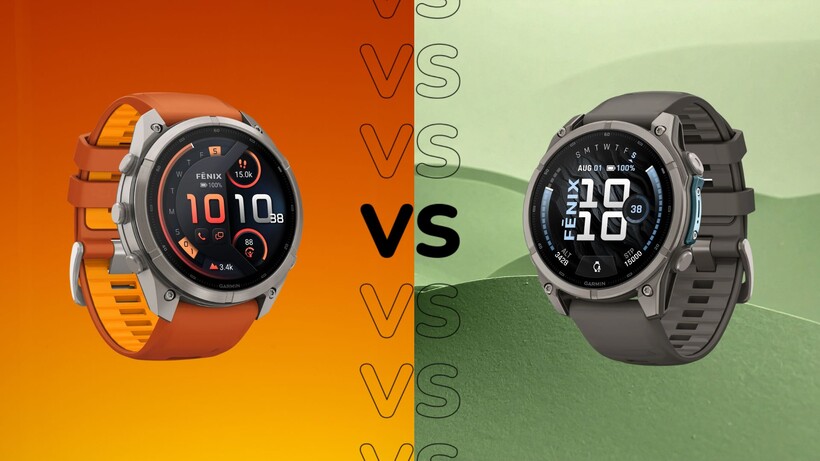
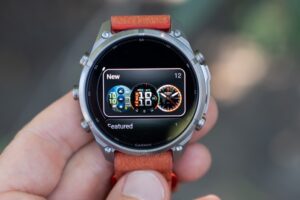
The moment you pick up the Fenix 9 Pro, the difference is obvious. The titanium case using nano-molding technology gives it a density and cool-to-the-touch feel that the polymer-based Fenix 9 simply cannot replicate. The Pro is thinner – at least 16% thinner than the Fenix 8 Pro – and that translates to a watch that slides under a jacket cuff instead of fighting it. The base Fenix 9, with its fiber-reinforced polymer construction and titanium rear cover, feels like a Fenix 8 with a new face. It’s not bad, but it’s not $999 bad either.
Both watches share the same 10ATM water resistance rating, sapphire lens, and leakproof inductive buttons. Both handle water skiing, snorkeling, and whitewater rafting without complaint. But the Pro’s titanium bezel and case give it a structural rigidity that inspires more confidence when you’re banging it against rock faces or dropping it on granite. The base model’s polymer sides are the weak point – they’re the first thing to show wear, and they’re the reason the watch feels less premium despite the sapphire lens and titanium rear plate.
Real-World Snappiness Test
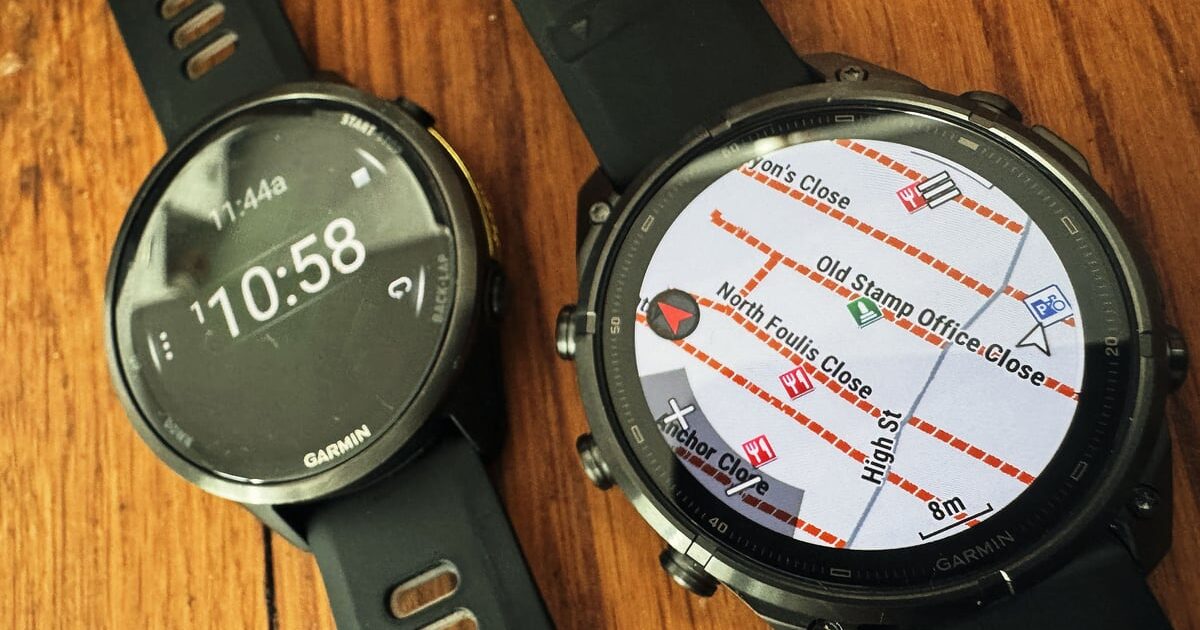
Here’s where the processor gap becomes real. The Fenix 9 Pro’s faster chip means map rendering is noticeably quicker, transitions between data screens are smoother, and the overall experience feels more responsive. The base Fenix 9 isn’t slow, exactly, but it’s not fast either. It’s the kind of “fine” that becomes annoying once you’ve used the Pro. If you’re coming from a Fenix 8, the improvement is marginal. If you’re coming from a Fenix 7 or earlier, you’ll be thrilled with either. But side by side, the Pro is the better experience, and knowing that the cheaper watch has a slower processor is a tough pill to swallow.
Both watches run the same software features – Garmin Epic Groups, the new stamina analysis with stamina curves and zones, improved rowing metrics, and the upgraded navigation engine. The difference is purely in how quickly those features respond to your inputs. In daily use, the gap is small. During a race or a fast-paced activity where you’re glancing at your wrist between breaths, the gap matters.
Low-Light Extraction & Color Science
The base Fenix 9’s AMOLED display is gorgeous. It’s brighter than the Fenix 8’s panel, colors pop with that characteristic AMOLED saturation, and it looks stunning every time you raise your wrist. If display quality is your top priority, the base Fenix 9 delivers the more attractive visual experience. But the Fenix 9 Pro’s MIP Solar display is the practical choice for anyone who actually uses their watch outdoors in bright sunlight. MIP remains readable in direct solar glare where AMOLED washes out, and the solar harvesting extends battery life from days to weeks.
The trade-off is stark: AMOLED gives you a watch that looks like a premium smartwatch. MIP Solar gives you a watch that functions like a survival tool. Neither is wrong, but they serve fundamentally different users. If you’re buying a Fenix to look good at the office and track your gym sessions, AMOLED wins. If you’re buying a Fenix because you genuinely need a device that won’t die on a multi-day backcountry trip, MIP Solar is the only option, and that means the Pro.
Who This Is Actually For
Buy the Fenix 9 AMOLED if: You want the best-looking display Garmin offers, you primarily train in urban or gym environments, you don’t need satellite connectivity, and you’d rather save $100-$400 depending on the configuration. You’re getting 90% of the experience for 75% of the price. The slower processor won’t bother you because you’ll never see the Pro to compare it to.
Buy the Fenix 9 Pro (AMOLED or MIP Solar) if: You want the titanium construction, the thinner profile, the faster processor, and the option of MIP Solar battery life. You’re an outdoor enthusiast who needs a tough adventure watch without feeling like you’re wearing a brick. You value build quality and long-term durability over display flashiness.
Buy the Fenix 9 Pro inReach if: You genuinely need satellite connectivity for emergency SOS, you want LTE for LiveTrack notifications and weather forecasts without your phone, and you’re willing to pay for the hardware plus an ongoing subscription. This is the watch for backcountry skiers, remote hikers, and anyone who ventures beyond cellular coverage regularly. The ability to send an SOS message through satellite communication when cellular networks disappear isn’t a gimmick – it’s potentially lifesaving.
Skip both and buy the discounted Fenix 8 Pro if: You’re value-conscious and the processor gap doesn’t keep you up at night. The Fenix 8 Pro’s price cut makes it the smart buy for anyone who wants the Pro-level features without paying the Fenix 9 generation premium. Best case, the Fenix 9 brings meaningful improvements. Worst case, the Fenix 8 Pro gets discounted and becomes even better value.
Tags: Garmin Fenix 9 vs Fenix 9 Pro, Fenix 9 Pro review, Fenix 9 AMOLED vs MIP Solar, Garmin inReach smartwatch, Fenix 9 Pro satellite connectivity, Garmin Fenix 9 price, Fenix 9 vs Fenix 8 Pro, Garmin Fenix 9 Pro titanium, best Garmin watch 2026, Fenix 9 Pro battery life, Garmin Fenix 9 processor speed, Fenix 9 Pro LTE, Garmin Epic Groups, Fenix 9 vs Fenix 9 Pro which to buy, Garmin Fenix 9 real world review