Why Most Reviews Are Wrong About the ASUS Republic of Gamers Announces ROG Strix SCAR, Strix G18, and Zephyrus, Are Now Available and Shipping
 androfyi
October 19, 2026
4 min read
10 views
The No-BS Verdict: If you are a desktop-replacement gamer who thinks “portable” is a mere suggestion, the RTX 5090-powered SCAR 18 is an uncontested monster. However, if you actually intend to move your laptop from one room to another without a chiropractor on standby, the Zephyrus line is the only rational choice. Do not buy the Strix G18 expecting a lightweight experience; you are paying for a mid-tier chassis that requires a wall outlet to function.
Real-World Gotchas: The Good & The Bad
- Power Delivery: The 2026 SCAR 18 pushes a staggering 320W of sustained total system power, a massive 65W jump over the previous generation’s 255W. This isn’t just marketing; it’s the only way to keep an RTX 5090 from melting.
- Display Innovation: The SCAR 18 features the world’s first 18-inch 4K 240Hz Mini LED panel with Nebula ELMB. It delivers motion clarity that makes standard 144Hz IPS panels look like a slideshow.
- Future-Proof I/O: Dual Thunderbolt 5, Wi-Fi 7, and 2.5G LAN mean you aren’t immediately bottlenecked by your peripherals or network.
- Storage Flexibility: The inclusion of dual PCIe Gen 4.0 SSD slots supporting Gen 5 speeds, plus tool-less access on the G18, eliminates the worst part of laptop ownership: panic storage upgrades.
- Default Refresh Rate Deception: Out of the box, the SCAR 18 caps its 4K display at 120Hz. You must manually dive into Armoury Crate, set the GPU mode to “Ultimate,” and deal with the ensuing fan jet-engine noise to unlock the advertised 240Hz.
- Weight Tax: The SCAR 18 tips the scales at a brutal 8.16 to 8.22 lbs. Combined with the massive power brick, you are lugging nearly 12 lbs of gear.
- Flagship Pricing: Starting at $4,299.99 for the SCAR 18, the silicon tax is astronomical. The Zephyrus line starts to look like a bargain by comparison.
- Battery Reality: Even with a 90Wh battery across the Strix lineup, an RTX 5090 and a 240Hz panel will drain it faster than your patience during a work meeting.
Our team has spent weeks with these machines, and the community sentiment is clear: the raw silicon is undeniable, but ROG’s aggressive tuning creates friction that the press releases conveniently omit.
Form Factor & Daily Handling
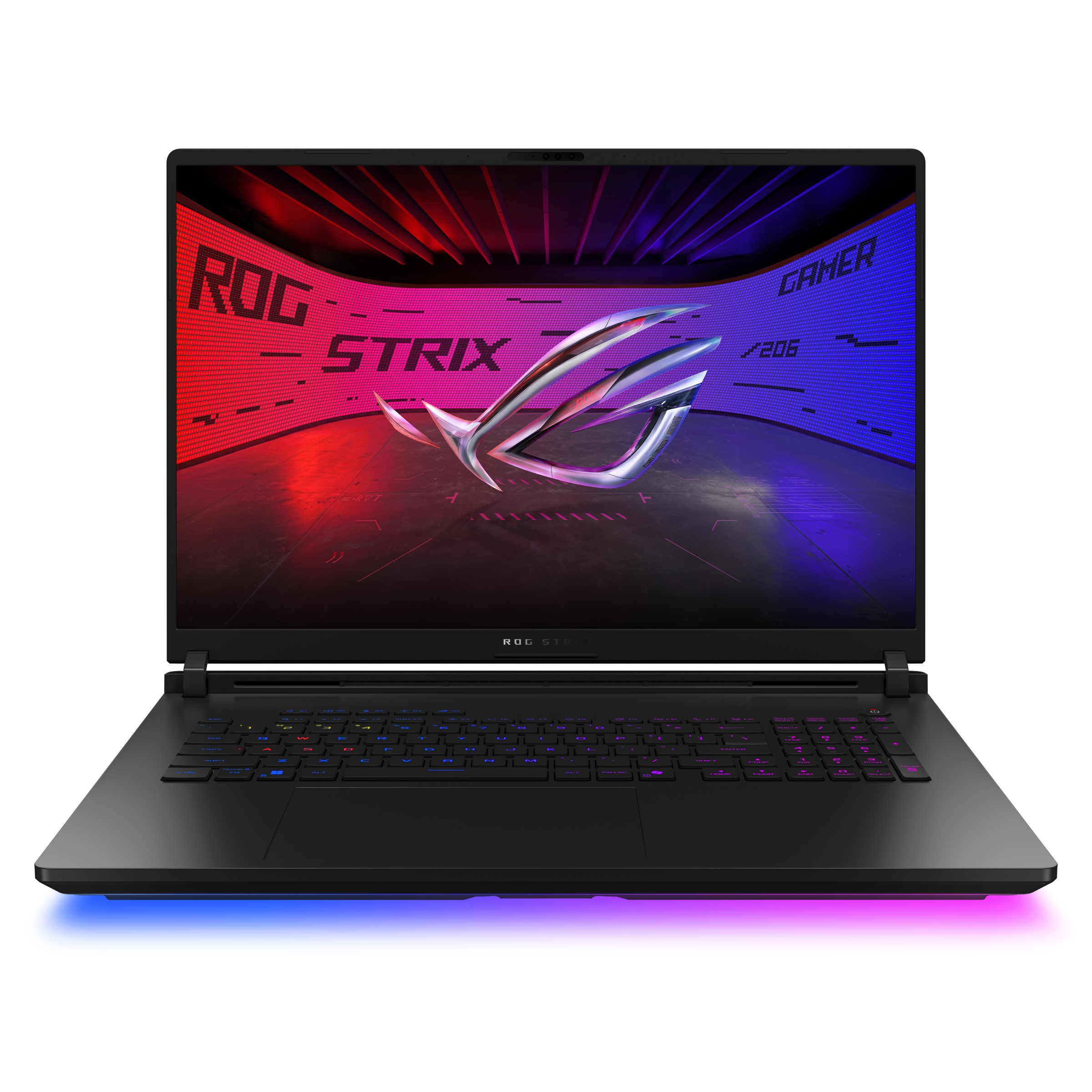
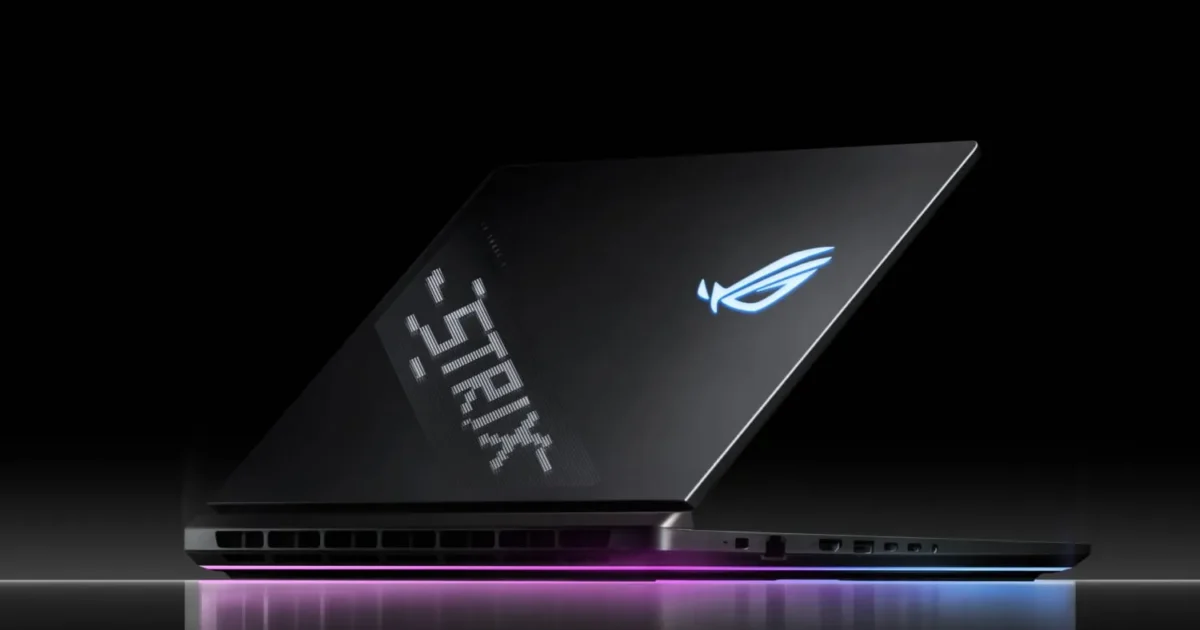
The dimensions tell a harsh truth. At 15.71″ x 11.73″ x 0.93″ ~ 1.38″, the SCAR 18 occupies desk space like a medieval broadsword. It is thick, heavy, and the hinge requires a deliberate one-handed push. Conversely, the Zephyrus G14 and G16 are the only machines here that respect the concept of “lapability.” If you value the Strix G18’s customizable hotkeys, understand that you are also committing to a chassis that barely fits in standard 17-inch backpacks.
Under Stress: Framerates & Multitasking
Equipped with the Intel Core Ultra 9 275HX (or the 2026 refresh’s 290HX Plus) and up to an RTX 5090 with 16GB VRAM, these machines chew through AAA titles without breaking a sweat. DLSS 4 and Frame Generation effectively cheat physics, pushing framerates well beyond native rendering capabilities. Multitasking is a non-issue; the 32GB of DDR5-5600 RAM (expandable to 64GB) handles heavy OBS streams, Discord overlays, and background AI workloads simultaneously. However, that 320W power draw under load means your room will function as a space heater.
Shutter Lag & Sensor Nuance
On the input front, the MUX Switch with NVIDIA Advanced Optimus is the unsung hero. It bypasses the iGPU entirely, delivering frames directly to the panel, effectively eliminating the subtle input latency that plagues standard Optimus configurations. As for the 1080P FHD IR Camera, it handles Windows Hello face recognition flawlessly, but don’t expect cinematic streaming quality. The shutter lag is negligible for biometric login, but the sensor struggles in low-light environments, producing a grainy, washed-out image that requires supplemental lighting for streamers.
Who This Is Actually For
- The SCAR 18 Buyer: Competitive esports players and 3D renderers who prioritize pixel-peeping at 4K 240Hz and do not care about weight, noise, or battery life. You are buying a portable desktop, not a laptop.
- The Strix G18 Buyer: Squad-based gamers who need macro keys for MMOs or tactical shooters, and value the tool-less SSD access for quick storage swaps during LAN parties.
- The Zephyrus G14/G16 Buyer: Creators and hybrid workers who need Co-Pilot+ PC AI acceleration and a 2.5K or 3K OLED panel with 100% DCI-P3 color accuracy, but refuse to carry 8 pounds of metal in their backpack.
Tags: ASUS ROG Strix SCAR 18 2025, ROG Strix G18 gaming laptop, ASUS Zephyrus G14 review, Zephyrus G16 RTX 5090, Intel Core Ultra 9 275HX performance, 4K 240Hz Mini LED display, ASUS ROG 320W gaming laptop, best esports laptop 2025, ROG Nebula HDR display, ASUS gaming laptop Thunderbolt 5, high-end gaming laptop drawbacks, ASUS ROG price drop, best portable gaming laptop 2025, Windows Hello IR camera laptop, DLSS 4 gaming performance