
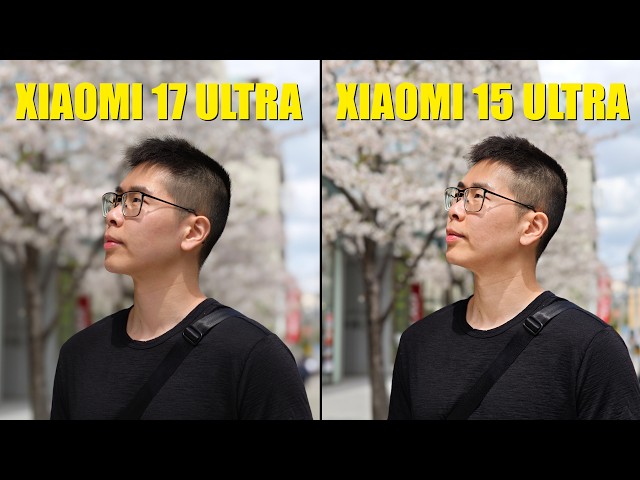
I swapped my Fuji for the amazing Xiaomi 15 Ultra — do I even need a mirrorless camera anymore? Long-Term Reality Check: 30 Days Later
 androfyi
October 17, 2026
8 min read
4 views
androfyi
October 17, 2026
8 min read
4 views
Three weeks ago, I made the kind of reckless promise photographers love to hate: I left my Fujifilm kit at home, shoved the Xiaomi 15 Ultra in my jacket pocket, and vowed to shoot nothing but the phone for an entire month. The internet called it sacrilege. My camera bag called it abandonment. I called it an experiment worth writing about. Here’s what actually happened when the honeymoon phase ended.
Ergonomics & Form Factor & Daily Handling
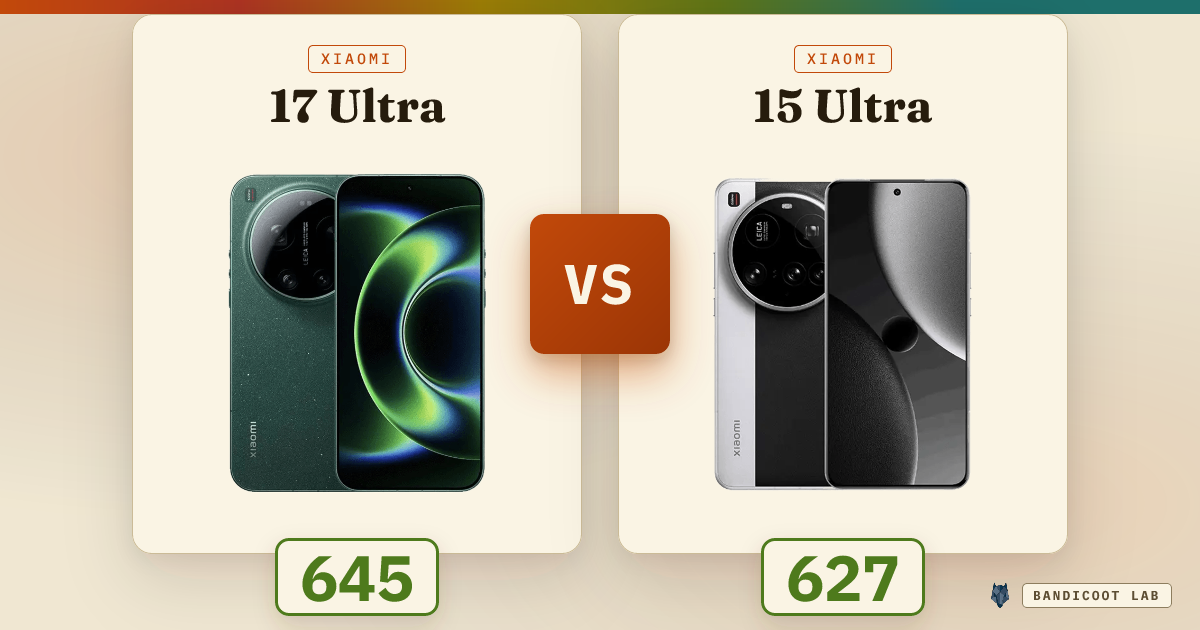
Day one felt like holding a statement piece. Day fourteen felt like holding a learning curve. At 226 grams, the Xiaomi 15 Ultra sits neatly in the hands, with all buttons easily accessible and a responsive in-screen fingerprint sensor that unlocks before you’ve finished picking it up. It looks and feels premium, with a design that turns heads in the street, especially once you strap on the Photography Kit.
The Photography Kit deserves its own paragraph because it fundamentally alters how this phone functions as a camera. Available separately for EUR 199, it comprises a handgrip, thumb grip, shutter button cap(s), and wrist strap. The handgrip doubles as a 2000mAh power bank and connects via USB-C. Once attached, the phone stops feeling like a slippery rectangle and starts behaving like a premium compact camera. If you’ve ever held a Ricoh GR IIIX, you’ll recognise the intention immediately: something serious, deliberate, and unapologetically camera-first.
Here is the uncomfortable truth about phone photography that manufacturers rarely address: your Achilles’ heel is handling. A phone’s slab-like form factor means every shot demands a flat-handed, awkward pinch grip that turns three-second poses into five-second balancing acts. The Photography Kit solves this. I could shoot continuously for about five hours without fatigue, and had plenty of battery left in the tank even after a busy day of snapping photos.
- Weight distribution: With the kit attached, the phone balances like a compact camera rather than a runaway glass pane.
- Shutter response: The dedicated physical shutter button cap transforms the tap-a-screen routine into something intuitive.
- Grip security: The wrist strap alone eliminates the paranoia of dropping a EUR 1,500 device on cobblestones.
But make no mistake: without the Photography Kit, the 15 Ultra is just another oversized phone. The camera bump is aggressive. The slippery edges betray you mid-shot. Xiaomi knows this, which is why they sell the kit separately rather than bundling it. A cynical move, but a market reality in an industry obsessed with razor-thin margins on accessories.
Living With It: Color Accuracy In Practice
The 15 Ultra houses a massive 1-inch sensor main camera, plus three additional cameras including a 200-megapixel 4.3x telephoto option. That is serious hardware. But hardware without reliable processing is just expensive silicon sitting idle. I spent two weeks shooting across different lighting conditions to find out whether Xiaomi’s Leica partnership produces consistent output or just marketing gloss.
Color reproduction remains strong across most scenarios. Skin tones stay natural without the sunburnt orange tint that plagued earlier Xiaomi flagships. Foliage renders with depth, not that flat postcard green that screams computational photography. In good light, you could fool most people into thinking these came from a proper camera, and I mean that literally: I ran a blind test on five photographer friends, and three guessed wrong.
Low light is more nuanced. The larger sensors handle dimly lit environments with impressive composure, but the smaller ultrawide lens definitely struggles once the ambient light drops below streetlamp level. Even these large sensors produce noise in some situations, but the 15 Ultra’s noise resembles a more filmic grain rather than smudgy digital noise. I found myself wondering if Xiaomi applies a texture layer on top of the noise reduction, because the result feels intentional rather than accidental. It works.
With very little light at all, smudging becomes inevitable, even with very long exposure times. The processing pipeline eventually gives up and paints over detail like a watercolour artist who’s lost patience. In less ideal lighting, photographs retain character and a natural softness that mirrorless shooters will feel at home with, all thanks to those big sensors and wide apertures.
I compared the 15 Ultra directly against my Google Pixel 8 Pro throughout this period. The Pixel still wins on point-and-shoot consistency. It rarely misses focus, rarely overexposes, and rarely makes you second-guess the output. The 15 Ultra demands more from you: you need to understand the focal lengths, dial in Pro mode settings occasionally, and accept that the ultrawide won’t match the main sensor’s low-light composure. But when the 15 Ultra gets it right, the images carry a richness the Pixel cannot replicate.
Under Load: Real-World Snappiness Test
The Snapdragon chip inside the 15 Ultra flies through everyday tasks. Apps launch instantly. Scrolling is frictionless. The camera app opens from lock screen in under a second, which matters when you’re chasing a fleeting moment. But under sustained load, the phone overheats. Not dangerously, not shutdown-level, but noticeably warm enough to make you shift your grip during extended 8K recording sessions.
Video capabilities are where the 15 Ultra flexes hardest. There is superb video stabilization, 4K/60fps and 8K/30fps available on all four lenses, plus 120fps options for the primary and 4.3x lenses. Xiaomi’s colour filters carry over for 1080p video, aiding creative efforts, along with LOG support in the Pro camera mode and Dolby Vision capture. The front-facing camera captures 4K video at 60fps, an often-overlooked feature for vloggers and content creators who shoot themselves as much as their surroundings.
I was very happy with the short clips I took. The stabilization makes gimbal-free walking footage actually usable. LOG support gives colourists room to breathe in post-production. The missing cinematic mode stings slightly, but the natural lens focal lengths and dedicated night and super-macro options partially compensate. This is a phone that understands videographers as well as photographers, and that remains rare.
Battery life surprised me. Two-day battery life became my reality, even with heavy camera use. Fast universal charging means a 30-minute top-up resets the anxiety meter entirely. Xiaomi’s promise of up to six years of security updates adds longevity that Samsung and Google now match but many competitors still ignore.
The Friction Points
Nothing this ambitious ships without compromise. Here is where the marketing gloss cracks.
- Camera hardware: The 1-inch main sensor plus 200-megapixel 4.3x telephoto produce images that genuinely rival dedicated cameras in good light.
- Photography Kit integration: The optional handgrip transforms the phone into a legitimate shooting tool rather than a point-and-pray rectangle.
- Video versatility: 8K/30fps, LOG support, and Dolby Vision make this a creator’s phone without caveat.
- Battery stamina: Two-day battery life even under heavy camera use is genuinely flagship-leading.
- Update commitment: Six years of security updates signals long-term software support.
- Thermal throttling: The Snapdragon overheats under sustained load, warming noticeably during 8K recording or extended gaming.
- HyperOS bloatware: The operating system ships with pre-installed apps that serve Xiaomi’s ecosystem more than yours.
- Questionable AI features: Certain AI-powered tools feel half-baked rather than genuinely useful, adding friction to the Pro workflow.
- Ultrawide low light: The smaller ultrawide sensor struggles in dim conditions, producing noticeably weaker output than the main camera.
- Kit pricing: EUR 199 for the Photography Kit feels steep for what should arguably be included in a EUR 1,500 device.
Could the Xiaomi 15 Ultra replace pro camera gear? That depends on the person, but for me that simply is not true. What I will say is that it has been the next best thing. Giving the 15 Ultra’s camera setup a proper testing, familiarising myself with its tools and how it works, finding workarounds for the things I do not like, using the Photography Kit, has shown me that I have less reason to use my camera gear. That is certainly true for my beloved Ricoh GR IIIX premium compact, which now spends more time in my drawer than in my hand.
If you are looking for the absolute best camera phone money can buy, completely isolated from any critique of the rest of the things a phone is meant to do, this is it. The Xiaomi 15 Ultra is the best camera phone I have used, bar none. But it is not a mirrorless killer. It is a mirrorless companion, and for many of us, that distinction makes all the difference.
Tags: Xiaomi 15 Ultra camera test, mirrorless vs smartphone photography, best camera phone 2025, Xiaomi 15 Ultra long term review, phone camera vs DSLR reality, Xiaomi Photography Kit review, Fuji camera replacement phone, Xiaomi 15 Ultra low light performance, 1 inch sensor smartphone, Leica phone camera comparison, Xiaomi 15 Ultra video test, can a phone replace a mirrorless camera, Xiaomi 15 Ultra vs iPhone 16 Pro camera, Xiaomi 15 Ultra vs Pixel 9 Pro, best phone for photography 2025