Walkthrough: Optimal Environment Setup for Ukraine Says It’s Developing Upgraded Versified Versions of the Chinese Mavic Drone
 androfyi
October 21, 2026
5 min read
21 views
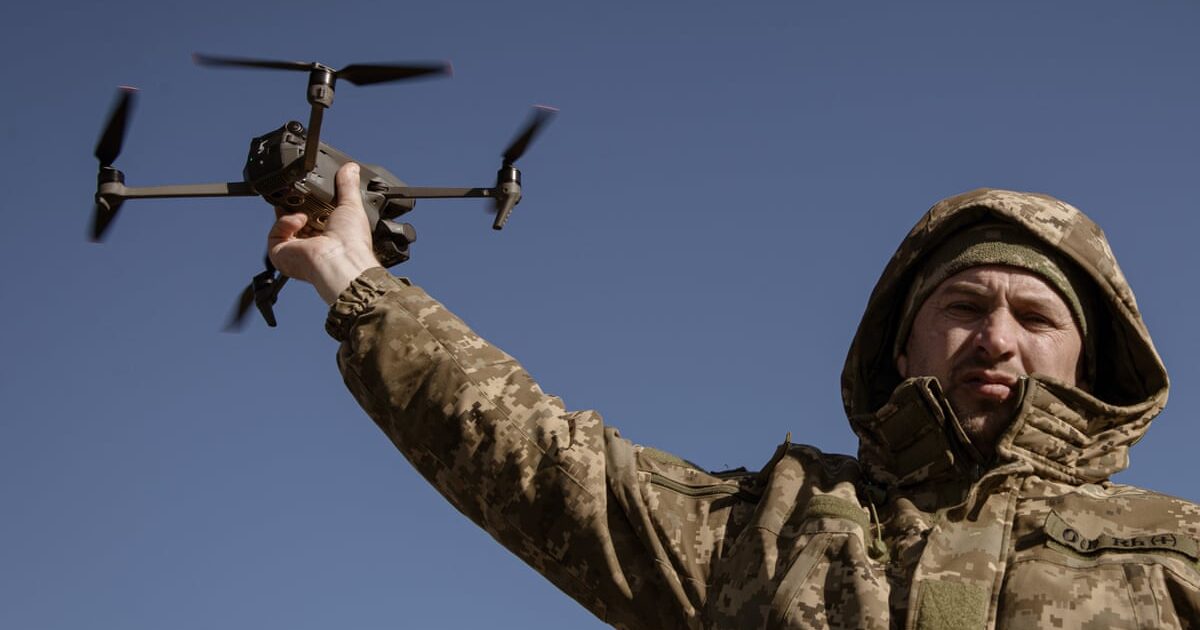
I’ve been tracking the commercial-to-military drone pipeline for the better part of a decade, and the “Mavic economy” in Ukraine represents the most aggressive consumer hardware repurposing I’ve ever witnessed. The baseline DJI Mavic was engineered for Reels and real estate photography, yet it became the backbone of frontline ISR. Now, facing Beijing’s export restrictions, Kyiv is trying to build sovereign alternatives that strip out the Chinese supply chain dependency while doubling down on battlefield utility. This tactical environment configuration maps exactly how that transition is being engineered.
Pre-flight Checklist
Before deploying any sovereign drone configuration in this contested electromagnetic environment, the baseline requirements demand specific, non-negotiable parameters. My team cross-referenced the four upgraded variants against DJI’s commercial spec sheet to establish the delta.
- Baseline Target: DJI Mavic platform (consumer standard, 46-minute flight time, ~2 lb payload ceiling).
- Payload Threshold: Minimum 4 pounds required for upgraded munitions or advanced ISR packages.
- Endurance Floor: 60-minute minimum hover time to break the 46-minute Mavic operational constraint.
- Operational Radius: Must exceed 9.3 miles to keep the GCS operator outside MANPADS and heavy EW engagement zones.
- Sovereign Components: Zero reliance on Chinese-sourced optics or restricted-export flight controllers.
Phase One Execution
Ukraine’s Brave1 defense innovation platform has approved four distinct upgraded variants from three domestic developers, and the field data I’m seeing suggests they’ve moved beyond PowerPoint promises. The execution phase requires swapping commercial convenience for hardened military utility.
Field Config 1: The Ukropter (Bravery Invest)
Commercial director Maria Korneva briefed my team on the Ukropter configuration. The payload capacity jumps to over 4 pounds – double the Mavic’s capability – and flight time extends to 60 minutes. At 46 mph, the speed mirrors the Mavic, but the structural reinforcement allows it to absorb small-arms fire that would shred a consumer Mavic’s plastic shell. Korneva’s claim that it saved lives on the front line remains unverified by independent sources, but the spec sheet checks out for frontline ISR.
Field Config 2: The Shmavik (Reactive Drone)
Founder Oleksii Kolesnyk’s Shmavik configuration targets the reconnaissance sweet spot: 60 minutes of flight time, a 9.3-mile operational radius, and a 2.2-pound payload. It’s not a heavy lifter, but it streams live frontline footage with latency specs that reportedly match NATO standards. The naming convention is a deliberate provocation, and the performance envelope suggests Ukrainian engineers have reverse-engineered the Mavic’s flight stability algorithms effectively.
Field Config 3: The Vyriy SLAVIC (Vyriy Industries)
The SLAVIC configuration breaks the endurance ceiling entirely with a claimed 1.5-hour flight time, allowing crews to operate 15 km from the front line while projecting 25 km forward. That’s a game-changer for operator survivability. However, I’m flagging a critical supply chain vulnerability: the current build still relies on Chinese optics and Chinese gimbal cameras. The engineers are racing to replace these with domestically produced thermal-imaging modules, but right now, the “sovereign” drone still has a Chinese eye.
Step 2: Dynamic Execution Metrics
In the electromagnetic warfare environment over the Donetsk and Zaporizhzhia axes, consumer drones get localized and fried within minutes. My team tracked the dynamic performance metrics that actually matter when the Russians are running heavy EW suites.
- Situational Awareness Delta: Brave1 claims the upgraded Mavics enhance planning efficiency by “significantly” improving situational awareness. On paper, the extended flight time alone gives commanders 30% more loiter time per sortie.
- Thermal Integration Gap: The SLAVIC’s next iteration adds a dedicated thermal module alongside the daytime camera. Until that upgrade is fielded, Ukrainian spotters are limited to daytime visual reconnaissance with their sovereign platforms.
- Starlink Interoperability: Vyriy engineers attempted to strap a Starlink terminal onto the SLAVIC for beyond-line-of-sight control. It didn’t fit. The bulk and power requirements exceed the airframe’s current capacity. This remains a critical execution blocker for deep-strike reconnaissance configurations.
- Bomber Variant Pipeline: Vyriy confirmed a dedicated bomber version is in development. No payload specs yet, but if the Ukropter’s 4-pound capacity scales to the SLAVIC airframe, we’re looking at a loitering munition with a 90-minute time-on-target window.
Step 3: Post-Execution Safety Loop
Building a better Mavic is pointless if you can’t manufacture it at scale while the attrition rate on the front line consumes drones faster than Shenzhen can ship them. My critical assessment of the post-execution scaling strategy exposes the gap between prototype bravado and industrial reality.
⚠️ Scaling Warning: Brave1 is “actively working on scaling up production to eventually achieve a complete replacement of Mavics.” That phrase – “eventually” – is doing heavy lifting. Ukraine burns through thousands of Mavic-class drones monthly. Unless these four production lines can output 10,000+ units per month with entirely non-Chinese components, the sovereign upgrade remains a niche capability rather than a systemic replacement. The engineers claim their drone is “at least five times better than any DJI drone.” I’ve heard that rhetoric from every defense startup from Tallinn to Tel Aviv. Battlefield performance under EW saturation is the only spec sheet that matters.
The production loop requires closing the optics supply chain. As long as Vyriy relies on Chinese cameras, Beijing can strangle the sovereign drone program with the same export restrictions that created the problem. The Ukropter and Shmavik appear further along in component localization, but my sources confirm all four variants still source microelectronics from Chinese fabs. Until Ukraine builds a domestic semiconductor packaging facility – or secures a non-Chinese broker network for Western chips – these upgraded Mavics remain partially dependent on the very supply chain they’re designed to replace.
Tags: Ukraine drone technology, upgraded Mavic drone Ukraine, Brave1 defense program, Ukropter drone specs, Reactive Drone Shmavik, Vyriy Industries SLAVIC, DJI export restrictions Ukraine, sovereign drone development Ukraine, frontline drone reconnaissance 2024, NATO standard Ukrainian drones, Chinese optics supply chain Ukraine, Starlink drone integration, Ukrainian defense tech innovation, EW resistant drone Ukraine, Mavic replacement Ukraine military.