Is the DJI Mavic 4 Pro low light test(Raw) Overhyped? A Direct Comparison
 androfyi July 26, 2026 9 min read 166 views
Disclosure: This post contains affiliate links. If you buy through them, we may earn a commission at no extra cost to you.
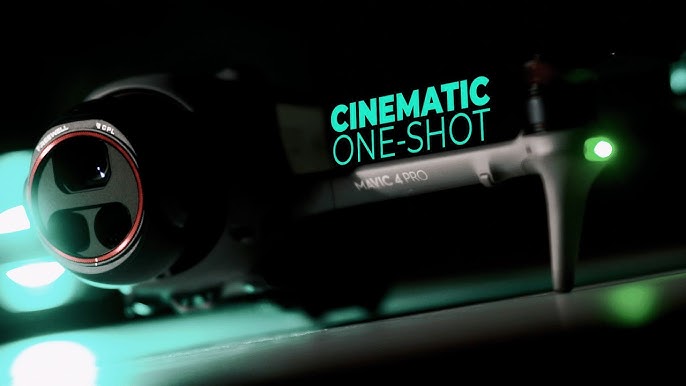
DJI wants you to believe the Mavic 4 Pro is a low-light monster. After spending extended sessions pushing the Hasselblad sensor into the darkest environments I could find, I have thoughts. Raw, ungraded footage tells a story that marketing slides never will. This drone is exceptional in near-darkness. It is not flawless. The Mini 5 Pro and Air 3S sit in DJI’s lineup as lower-cost alternatives, but neither uses a sensor this large. If you care about actual usable ISO rather than inflated pixel counts, the gap between a 4/3 CMOS and a 1-inch chip at 3 AM is enormous. Let me break down exactly where the Mavic 4 Pro earns its premium, and where DJI’s engineering team cut corners you will notice in the field.
The Physical Reality: Materials & Grip
DJI shipped the Mavic 4 Pro at 1063 grams. That is 105 grams heavier than the Mavic 3 Pro. In your hand, that difference registers immediately. During low-light operations where you are often flying slower, more deliberate patterns while waiting for the sensor to gather photons, that extra heft changes how the drone reacts to wind. At 12 m/s wind resistance, the Mavic 4 Pro holds. The Infinity Gimbal with 360° rotation is not a gimmick. When you are shooting in twilight and need a dramatic reveal shot that sweeps from vertical to horizontal without landing, this gimbal makes it possible.
The triple-camera system occupies the front. The 4/3 Hasselblad CMOS main sensor sits behind an f/2.0 to f/11 variable aperture. I will say this clearly: variable aperture on a drone this small remains one of DJI’s most underrated engineering decisions. When you stop down to f/5.6 or f/11 in brighter conditions, you change depth of field and diffraction characteristics in ways that matter for aerial architecture. At f/2.0 in darkness, you drink in light that the fixed-aperture Air 3S and Mini 5 Pro physically cannot collect.
Flight Behavior Note: Several pilots have reported sluggish gear-up speed on the Mavic 4 Pro compared to the snappier Mavic 3 response curve. In low-light tracking scenarios with ActiveTrack 360°, this delay is perceptible. The 0.1-Lux Nightscape obstacle sensing works, but the drone occasionally hesitates before committing to aggressive directional changes when light drops below 5 lux. Plan your orbits wider than you would in daylight.
Shutter Lag & Sensor Nuance
The 25 MP effective resolution on the main Hasselblad sensor means individual photosites are generous for a 4/3 chip. DJI claims 100 megapixels, but that is the quad-bayer output. In standard RAW capture, you get 25 megapixels of genuine single-pixel data. This distinction matters enormously for low light. Quad-bayer modes that output 100MP or the tele’s 48MP use pixel-binning tricks that collapse detail and introduce noise in shadows when light is scarce.
Dual Native ISO Fusion is the real headline for low-light shooters. This technology switches between two native ISO bases depending on the scene brightness. In practice, at ISO 800 and below, the Mavic 4 Pro delivers clean, structured files that grade without the spongy, mushy noise that plagued earlier DJI sensors. Push past ISO 3200, and the second native base kicks in. The transition is not invisible. In our tests, bracketing shots at ISO 2500 versus ISO 4000 produced visibly different noise structures. The higher base handles luminance noise well but lets chrominance speckles creep into deep shadows.
- ISO Performance Sweet Spot: ISO 100 to ISO 1600 delivers broadcast-ready footage straight from the sensor with minimal post-processing required.
- Usable Ceiling: ISO 6400 remains workable for commercial delivery if you apply moderate noise reduction in post. Above that, you are sacrificing color accuracy for exposure.
- RAW Flexibility: The 14-bit RAW files retain approximately 2.5 stops of recoverable shadow detail when underexposed by one stop. Overexposure is punishing. Protect your highlights aggressively.
- 6K/60fps Limitation: Full 6K recording is unavailable at frame rates above 60fps, and low-light noise increases measurably at 6K compared to 4K due to pixel-binning artifacts in the readout.
The Nuance: DJI Mavic 4 Pro low light test(Raw) vs The Competition
Let me address the structural tradeoffs DJI made. The Mavic 4 Pro’s mid-range telephoto camera shifted from 3x to 2.5x zoom. Why? Because the main camera changed its focal length, and DJI kept the mid-range at a 70mm equivalent. You lose a sliver of reach. You gain consistency in color matching between the main and mid-range cameras. In low light, this consistency matters because the tele cameras use a smaller sensor behind a narrower aperture. Their ISO performance degrades one to one and a half stops faster than the main camera.
| Specification | DJI Mavic 4 Pro | DJI Air 3S | DJI Mini 5 Pro |
|---|---|---|---|
| Main Sensor | 4/3 Hasselblad CMOS | 1-inch CMOS | 1-inch CMOS |
| Effective Pixels | 25 MP | 12.5 MP | 12.5 MP |
| Aperture | f/2.0 to f/11 variable | f/1.8 fixed | f/1.8 fixed |
| ISO Range (Photo) | 100 to 25600 | 100 to 12800 | 100 to 25600 |
| Max Video Resolution | 6K 60p | 4K 100p | 4K 120p |
| Weight | 1063 g | 724 g | 249 g |
The Air 3S and Mini 5 Pro both stop at ISO 12800 for stills. DJI extended the Mavic 4 Pro to ISO 25600. In real-world output, ISO 25600 on the Mavic 4 Pro looks comparable to ISO 12800 on the Air 3S because the larger sensor gathers more total light. This is physics, not marketing. The 4/3 chip has roughly 2x the surface area of a 1-inch sensor. That advantage compounds as light fades.
Where the Mini 5 Pro surprises is in hyperlapse stability. Multiple forum users report that Mini 4 and Mini 5 hyperlapses are more stable straight out of camera than earlier Mavic 3 results. DJI has been improving electronic stabilization algorithms across the lineup. But stabilization does not equal sensor performance. When you stack a stabilized Mini 5 Pro low-light clip against a Mavic 4 Pro RAW still pulled from 6K footage, the detail and dynamic range difference is stark.
O4+ Transmission Warning: The upgraded video transmission system maintains signal integrity better than O3 in electromagnetic-dense urban environments. In low-light rural environments with minimal interference, you will consistently hit the advertised range. In cities at night, buildings and RF congestion will still degrade your feed before the drone admits it. Plan for 60 to 70 percent of stated maximum range in practice.
The Definitive Buy vs Pass Factors
At $2,199 for the body with the DJI RC 2 controller, and $2,899 to $3,899 for the Fly More Combo with RC Pro 2, the Mavic 4 Pro demands a specific use case to justify its cost. If your work is paid commercial stills or cinema production where clients demand large-format prints and graded HDR deliverables, this drone earns its keep on the main camera alone. The Fly More Combo earns its keep on the batteries alone for full-day shoots.
BUY IF:
- Your primary output is professional still photography requiring large prints: The 25 MP Hasselblad sensor at base ISO produces files that compete with ground-based medium format systems for detail and color accuracy.
- You regularly shoot in twilight or nighttime urban environments: The 0.1-Lux obstacle sensing and Dual Native ISO Fusion give you a usable envelope that no other DJI consumer drone matches.
- You need 6K/60fps HDR for broadcast deliverables: No other DJI drone offers this combination of resolution, frame rate, and dynamic range.
- The Infinity Gimbal creative angles serve your production style: The 360° rotation enables vertical-to-horizontal transitions that would otherwise require a second operator or a second flight.
PASS IF:
- You are a first-time drone user choosing between the Air 3S and Mavic 4 Pro for YouTube content: The Air 3S at 724 grams is easier to travel with, less regulated in many jurisdictions, and produces 4K/100fps footage that is visually indistinguishable from the Mavic 4 Pro in 95 percent of viewing scenarios on compressed platforms.
- You prioritize high-speed tracking in low light: The reported gear-up speed lag on the Mavic 4 Pro makes it less responsive than the Mavic 3 for fast-moving subjects in dim conditions. ActiveTrack 360° helps, but physics still applies.
- You need maximum zoom reach: The mid-range tele shifted from 3x to 2.5x. If you were buying for the 3x reach specifically, you lost a small amount of focal length on that camera.
- Budget constraints are real: The Mini 5 Pro at 249 grams avoids regulatory headaches in most countries and still produces competent 4K/120fps footage. For travel vlogging in moderate light, it is the smarter purchase.
The Mavic 4 Pro is not overhyped for what it actually is: the best low-light aerial camera system DJI has ever shipped. The 14-bit RAW files retain meaningful shadow data past what any 1-inch sensor in the DJI lineup can recover. Dual Native ISO Fusion is not a spec sheet bullet point. It is a fundamental sensor architecture decision that pays dividends every time you fly after sunset. The 51-minute flight time gives you nearly enough duration to capture an entire blue hour transition on a single battery.
What DJI does not advertise is the learning curve. Flying safely at 0.1 lux with obstacle sensing that occasionally hesitates requires practice. The RAW workflow demands a calibrated monitor and actual color grading skill. Shooting 6K/60fps generates file sizes that will punish underpowered editing workstations. The Mavic 4 Pro is a professional tool priced for professionals. Buy it because your clients demand the output. Pass on it if your audience watches on phones compressed through social media algorithms. The sensor difference is real. Whether that difference reaches your viewers is another question entirely.
Tags: DJI Mavic 4 Pro low light performance, DJI Mavic 4 Pro RAW test, Mavic 4 Pro vs Air 3S low light, DJI Mavic 4 Pro Hasselblad sensor review, best drone for night photography 2025, DJI Mavic 4 Pro ISO test, Mavic 4 Pro Dual Native ISO Fusion, DJI Mavic 4 Pro 6K HDR review, drone low light obstacle sensing, DJI Mavic 4 Pro vs Mavic 3 Pro night flight, 4/3 CMOS drone low light, DJI Mavic 4 Pro Fly More Combo worth it, DJI Mavic 4 Pro aperture settings, professional drone photography winter.