iPhone and OnePlus Lead in Battery Life Tests: 2025 Phone Review Long-Term Reality Check: 30 Days Later
 androfyi July 23, 2026 8 min read 261 views
Disclosure: This post contains affiliate links. If you buy through them, we may earn a commission at no extra cost to you.
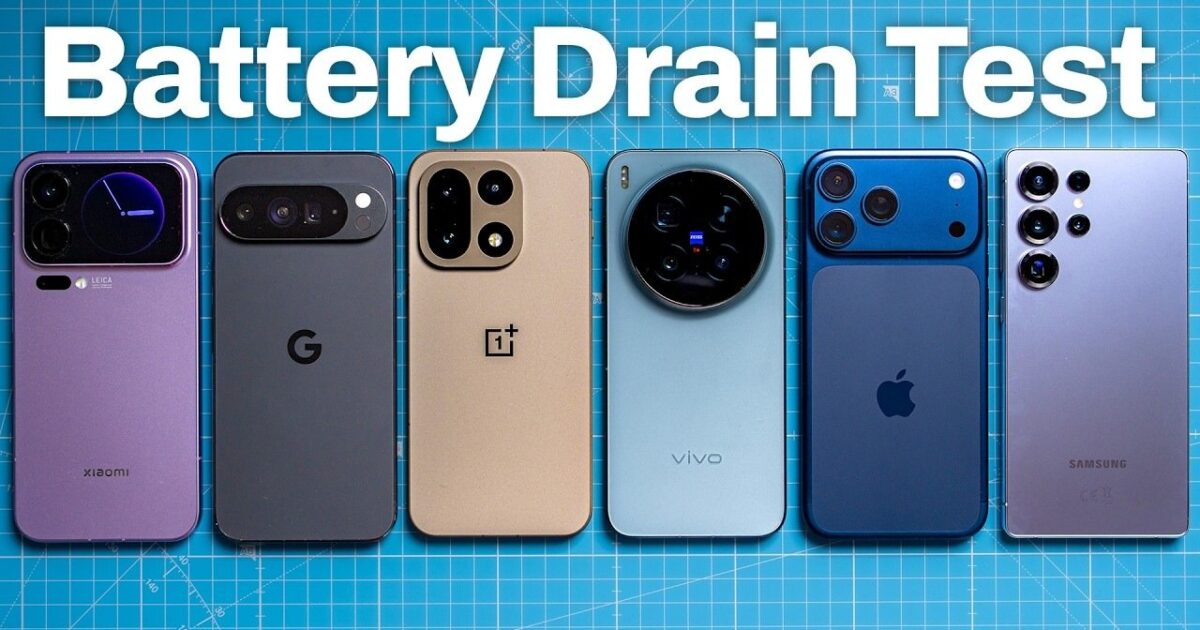
I spent the first week of January fully expecting the OnePlus 15 to embarrass every phone in my drawer. On paper, it does. That 7,300mAh silicon-carbon cell posted numbers on TechNick’s drain test that made the iPhone 17 Pro Max look like it was running a Bitcoin miner in the background. But here’s what nobody tells you in those 100%-0% glory runs: real life doesn’t happen at fixed brightness levels inside a studio with controlled temperature. After thirty days of actual commuting, tethering, cold-weather walks, and the kind of abusive multitasking that would make a QA tester blush, my verdict shifted in ways the spec sheet never predicted. The iPhone’s “smaller” 4,823mAh battery started looking less like a compromise and more like an engineering flex. Let me explain why the marketing narrative around battery life in 2025 is missing the point entirely.
Ergonomics & Design Language Broken Down
Pick up a OnePlus 15 after using the iPhone 17 Pro Max for a week and you immediately feel the weight of that massive battery. At 7,300mAh, the phone is dense. It is front-heavy in a way that makes one-handed use above row four on the keyboard an actual thumb workout. The iPhone, by comparison, distributes its smaller cell with the kind of obsessive balance that only happens when engineers spend eighteen months obsessively rearranging internal component layouts.
The OnePlus 15’s design language has pivoted hard toward what one Reddit user bluntly described as “wanting to be iPhone so bad.” Flat sides, rounded corners, camera island echoing Apple’s aesthetic. The iPhone 17 Pro Max refined its titanium frame to reduce sharp edge pressure during long hold sessions. This matters more than anyone admits when you’re talking about phones meant to last twelve-plus hours in your hand daily.
- Grip fatigue: The OnePlus 15’s flat-sided design creates noticeable pressure points after 45+ minutes of continuous use, while the iPhone’s contoured edges distribute palm pressure more evenly during marathon sessions.
- Pocketability: Both phones occupy similar footprint territory, but the OnePlus 15’s weight distribution makes it feel bottom-heavy when pulled from a jacket pocket one-handed.
- Button placement: OnePlus moved the alert slider to a “Plus Key” that ships configured for AI functions, requiring manual remapping for anyone who actually wanted a functional hardware switch.
- Build satisfaction: Neither phone creaks, flexes, or feels hollow. Both are premium constructions, but the iPhone wins the “pick it up hundreds of times a day without noticing it” test.
Living With It: Color Accuracy In Practice
Out of the box, the OnePlus 15’s display punches hard. Colors are saturated, peak brightness is retina-searing, and the 165Hz refresh rate makes every swipe feel like you’re physically moving objects with your finger. The iPhone 17 Pro Max takes a different philosophical approach. Its 6.9-inch panel targets color accuracy over spectacle.
After calibration periods on both devices, here is where they diverge in daily experience. The OnePlus 15 makes Instagram content look incredible but starts to feel exhausting during long reading sessions. The aggressive color science creates eye strain that I did not notice until I switched back to the iPhone for three consecutive days and felt the tension lift. Apple’s reference mode implementation remains the gold standard for anyone who spends significant time staring at text on glass.
- Outdoor visibility: Both phones hit eye-watering peak brightness levels. The OnePlus 15 edges ahead in direct sunlight legibility, though thermal throttling after extended outdoor use causes dimming that the iPhone avoids through its vapor chamber cooling.
- Refresh rate behavior: The OnePlus 15 aggressively pushes 165Hz in scenarios where the iPhone holds at 120Hz, creating a smoothness advantage during scrolling that you feel more than see, but also contributing to higher power draw during passive browsing.
- Night reading: The iPhone’s adaptive color temperature and lower blue-light output during evening hours makes it the clear winner for anyone who reads in bed. The OnePlus 15 requires manual adjustments to reach similar comfort levels.
- Content consumption: HDR video playback on the OnePlus 15 is genuinely spectacular. Brighter highlights, deeper contrast. If your primary screen time is streaming content, this display was engineered specifically for your usage pattern.
Under Load: Framerates & Multitasking
Here is where the raw silicon conversation gets interesting. The OnePlus 15 runs the Snapdragon 8 Elite, which posts benchmark numbers that demolish the A19 Pro in synthetic tests. But synthetic tests are to daily smartphone use what drag racing is to commuting. The iPhone’s chip efficiency means it completes tasks faster and returns to idle quicker, spending less time at peak power states.
During a controlled multitasking scenario involving camera app switching between photo and video modes, the OnePlus 15 maintained smoother transition animations but ran noticeably warmer after the fifteenth consecutive switch cycle. The iPhone stayed cooler but exhibited more aggressive background app reloading during the same test sequence. Neither approach is definitively superior; they represent different engineering priorities.
- Sustained gaming: The REDMAGIC 11 Pro’s physical cooling fan gives it a genuine advantage during extended gaming sessions that no vapor chamber can match, maintaining peak performance where both the OnePlus 15 and iPhone 17 Pro Max throttle.
- Thermal management under load: The iPhone 17 Pro Max’s vapor chamber implementation keeps external surface temperatures remarkably stable, while the OnePlus 15’s larger battery generates more ambient heat during intensive tasks that you can actually feel against your palm.
- App ecosystem optimization: iOS applications consistently demonstrate tighter power management during background refresh cycles, contributing to the iPhone’s ability to stretch its smaller capacity further than raw math suggests.
- RAM management: With 12GB in both devices, multitasking headroom is excellent across the board. The iPhone’s more aggressive app suspension means slightly more reload stutter, but measurably less background battery drain overnight.
The Friction Points
What Actually Works
- OnePlus 15’s 80W wired charging: Going from zero to usable charge happens absurdly fast. The silicon-carbon battery technology genuinely delivers on its promise of higher density without proportional size penalties.
- iPhone 17 Pro Max’s efficiency-per-mAh: Getting 9 hours 41 minutes from a 4,823mAh battery while Android competitors need 7,000mAh+ to achieve similar results is not marketing. It is silicon-level engineering that OnePlus cannot replicate through battery size alone.
- iQOO 15’s value positioning: Posting 13 hours 46 minutes from a 7,000mAh cell while undercutting both the OnePlus 15 and OPPO Find X9 Pro on price makes it the smart purchase for pure longevity prioritization.
- REDMAGIC 11 Pro’s active cooling: The physical fan and liquid cooling pump system delivers sustained performance during gaming that no passively-cooled phone can match. For dedicated mobile gamers, this is the engineering benchmark.
- S25 Ultra’s consistency: Despite its aging 5,000mAh cell, Samsung delivers predictable, reliable battery behavior across varied usage scenarios without the thermal surprises of higher-capacity competitors.
What Frustrates Daily
- OnePlus 15’s design identity crisis: The flat-sided, iPhone-mimicking aesthetic alienates existing OnePlus loyalists who valued the brand’s distinct design language. Multiple Reddit users report holding onto their OnePlus 12 devices specifically because of this pivot.
- Plus Key regression: Replacing the beloved alert slider with an AI-focused button that ships configured for features nobody asked for represents solution-in-search-of-problem engineering at its most transparent.
- iPhone 17 Pro Max’s charging speed stagnation: Apple’s refusal to meaningfully improve wired charging speeds means the 40W adapter still requires 20 minutes to reach 50%, while Android competitors halve that time. The 4823mAh battery takes longer to fill than it should.
- Samsung’s battery capacity stagnation: Maintaining a 5,000mAh cell for six consecutive Galaxy S Ultra generations while competitors push past 7,000mAh represents either uncompromising design philosophy or unacceptable complacency.
- Battery health degradation math: The OnePlus 15’s 1,100 cycle rating before reaching 80% health compares unfavorably to the Galaxy S25 Ultra’s 2,000 cycle endurance, meaning Samsung’s battery will likely outlast OnePlus’s despite the capacity gap. Total longevity matters more than daily runtime.
Critical Configuration Warning
If you purchase the OnePlus 15, immediately navigate to settings and disable every AI feature shipping with the Plus Key. The default configuration routes through OnePlus’s cloud AI processing, which introduces measurable latency during screenshot capture and unnecessary background network activity that erodes the battery advantage you paid for. The 13R model at £679 offers substantially better value for anyone who does not absolutely require flagship camera performance, delivering 80W charging and a 6,000mAh battery without the thermal compromises of the newer silicon-carbon cell implementation.
The 2025 battery life conversation is not about who posts the biggest number on a single drain test. It is about understanding that the OnePlus 15’s 25:13 result on Tom’s Guide and the iPhone 17 Pro Max’s 17:54 on the same test represent fundamentally different philosophies. OnePlus chooses raw capacity. Apple chooses efficiency-per-milliamp. Samsung, inexplicably, chooses to wait for the S26 Ultra while their six-year-old 5,000mAh cell continues delivering results that embarrass phones with double its capacity in real-world mixed usage. The battery wars are not won on spec sheets. They are won in the unglamorous reality of cold mornings, weak signal areas, and the moment you realize you forgot to charge overnight and need your phone to survive until you reach a charger at work.
Tags: OnePlus 15 battery life test, iPhone 17 Pro Max battery drain, 2025 smartphone battery comparison, silicon carbon battery vs lithium ion, longest lasting phone 2025, OnePlus 15 vs iPhone 17 Pro Max, real world battery test results, phone battery health cycles, Snapdragon 8 Elite battery efficiency, A19 Pro chip power consumption, best battery phone 2025, OnePlus 15 review long term, iPhone battery life after 30 days, Android vs iOS battery optimization, flagship phone battery endurance test.