Best Smartphones 2026: The REAL Winners (EVERY Budget) Long-Term Reality Check: 30 Days Later
 androfyi
May 31, 2026
6 min read
213 views
androfyi
May 31, 2026
6 min read
213 views
Here is the dirty secret of the smartphone review cycle: day one impressions are almost worthless. The phone is clean, the UI is snappy, the cameras are fresh out of the box. But what happens after a month? After the software updates roll in and the honeymoon phase ends? That is where the real winners reveal themselves. I have spent the last thirty days living with the most talked about handsets of 2026, and the results have completely reshuffled my launch day rankings. The spec sheets told one story; the daily grind told a very different one.
Ergonomics & The Physical Reality: Materials & Grip
Slapping a phone down on a desk is one thing; shoving it into a tight jeans pocket while sprinting for a train is another. The Samsung Galaxy S26 Ultra is an absolute beast of a productivity tool, but over the last month, its sheer size has become a genuine ergonomic tax. My pinky ache is real. By contrast, the Google Pixel 10 Pro is a masterpiece of compact engineering. At 6.3 inches, it disappears in the hand without sacrificing screen real estate. The OnePlus 15, however, strikes a different balance entirely. It is a slab, yes, but the curved edges and lighter weight make it feel like a tool designed for human hands, not just spec sheet bragging rights. Then there is the Honor 400 Pro, which feels dangerously close to flagship territory but with a grip that makes the Ultra feel like a liability.
Living With It: Color Accuracy In Practice
Marketing slides love to throw around “nits” and “DCI-P3 coverage,” but none of that matters if the display looks washed out when you are doom-scrolling at 2 AM. The Honor 400 Pro is a revelation here. That 5,000 nit 120 Hz AMOLED panel is not just bright; it is tuned with a precision that makes the Vivo V60’s display look almost garish by comparison. The Pixel 10 Pro XL holds its own with Google’s trademark natural saturation, but the Tensor G5 chip sometimes struggles to keep the tone mapping smooth when shifting from a dark UI to a bright webpage. The Nothing Phone (4a) Pro punches absurdly above its price point, offering color accuracy that puts phones twice its cost to shame. It is a sleeper pick that quietly delivers a visual experience far beyond its station.
Under Load: Under Stress: Framerates & Multitasking
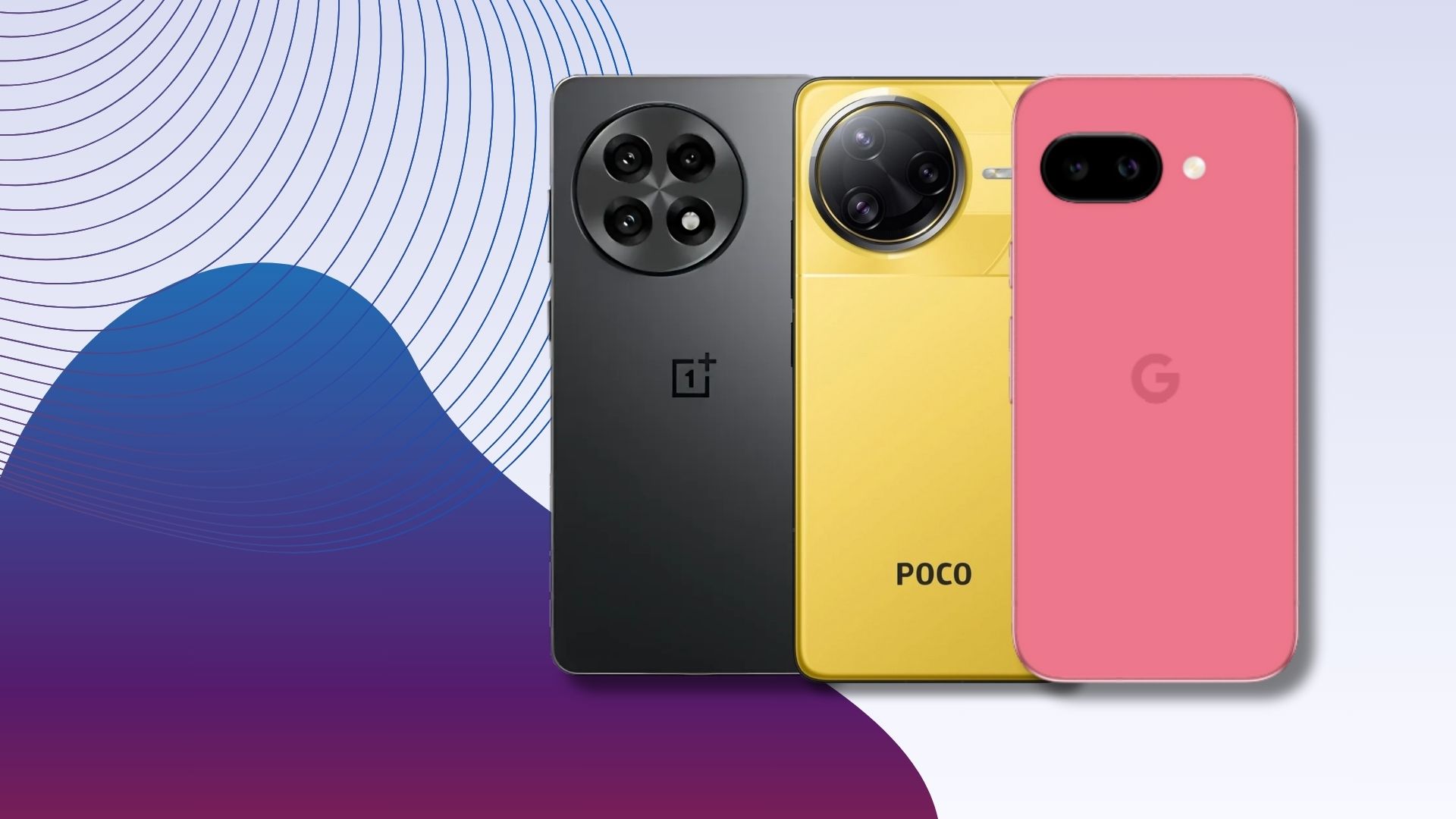
This is where the illusion of “flagship performance” dies. The Poco F8 Pro is the phone that broke the rules this year. With the Snapdragon 8 Elite chip crammed into a £399 body, it runs circles around devices costing three times as much. I threw heavy multitasking at it, switching between 4K video editing and high-end gaming, and it just shrugged. The Snapdragon 8 Gen 3 in the OnePlus 13R is no slither either, offering a smoothness that belies its mid-range price tag. Meanwhile, the Asus ROG Phone 9 Pro Edition remains the undisputed king of raw framerates, but let us be honest: unless you are a competitive mobile gamer, that performance is overkill. The Apple iPhone 17 Pro Max, powered by the A19 chip, remains the benchmark for sustained performance without thermal throttling. It does not just run fast; it stays fast.
The Friction Points
Every phone has a catch. The Samsung Galaxy S26 Ultra has the cameras and the S Pen, but the software bloat is suffocating. The Vivo X300 Ultra delivers insane optics, but the battery life is a compromise you have to accept. The Google Pixel 10 Pro is a marvel of AI integration, but the Magic Cue feature still feels like it is in beta, often surfacing suggestions that make absolutely no sense in context. And the iPhone 17? It is the safe, reliable choice, but the bezels are starting to look dated next to the edge-to-edge displays of the competition.
Why You Should Buy
- Daily Driver Reliability: The OnePlus 15 and Pixel 10 Pro offer the most friction-free experiences over a 30-day period, with consistent performance and fewer software hiccups.
- Mid-Range Dominance: The Poco F8 Pro and Honor 400 Pro prove that spending over £800 is no longer a requirement for a premium, lag-free experience.
- AI That Actually Works: Google’s Tensor G5 and the Pixel 10 Pro lineup deliver AI features like Camera Coach and Best Take that provide genuine utility rather than just marketing buzz.
- Battery Endurance: The massive cells in the Poco F8 Pro (6,210 mAh) and OnePlus 15 (7,200 mAh) effectively eliminate range anxiety for the vast majority of users.
Why You Should Skip
- Ergonomic Nightmares: The Samsung Galaxy S26 Ultra and Vivo X300 Ultra are heavy, unwieldy slabs that cause genuine hand fatigue over extended use.
- Software Bloat: Samsung’s One UI still feels overstuffed with duplicate apps and features that most users will never touch, slowing down the overall experience.
- Battery Compromises: The Vivo X300 Ultra’s incredible camera system comes at the cost of battery life, requiring mid-day charges for moderate users.
- Beta-Feature Fatigue: Google’s Magic Cue on the Pixel 10 Pro XL is still half-baked, frequently offering irrelevant suggestions that disrupt workflow rather than aiding it.
Configuration Warnings
- Pixel 10 Pro XL: If you are in the US, be aware of the lack of a physical SIM slot; eSIM only can be a dealbreaker for frequent travelers.
- OnePlus 15: The magnetic charging feature requires proprietary accessories that are sold separately, adding hidden costs to the overall package.
- Poco F8 Pro: While the Snapdragon 8 Elite is powerful, the device can experience thermal throttling under sustained, heavy gaming sessions without a fan accessory.
The landscape of 2026 is defined by a simple truth: the mid-range has eaten the flagship’s lunch. You no longer need to remortgage your house to get a phone that feels premium, shoots stunning video, and lasts all day. The Poco F8 Pro and Honor 400 Pro are the proof. They are the real winners this year, forcing the industry to rethink its pricing. If you are buying a phone in 2026, spend smart, not big.
Tags: best smartphones 2026, top rated phones 2026, budget smartphones 2026, flagship killers 2026, best camera phones 2026, longest battery life phones 2026, best compact phones 2026, foldable phones 2026, best value phones 2026, smartphone reviews 2026