I Swapped My Old Device for the Sony a7 V: The New Full-Frame Standard-Bearer: My Experience
 androfyi
March 16, 2026
4 min read
191 views
androfyi
March 16, 2026
4 min read
191 views
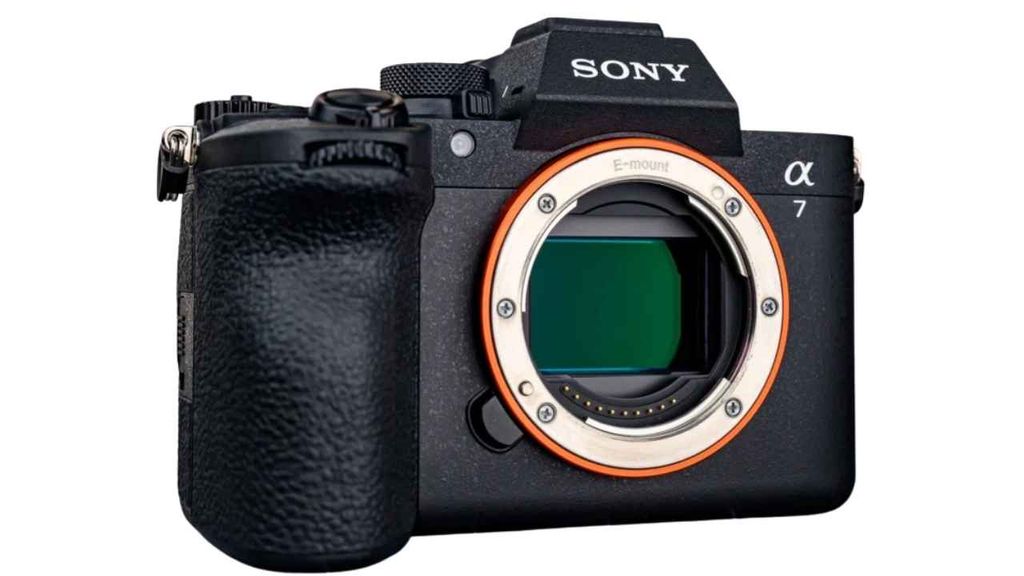
For the past three years, my Sony A7 IV has been my go-to for everything – weddings, commercial shoots, travel vlogs, even backyard birding. It’s a solid camera. But when Sony announced the a7 V with its new sensor, BIONZ XR2 processor, and full-frame 4K/60p video, I knew it was time. I sold my A7 IV, pre-ordered the a7 V, and spent the last month putting it through its paces. Was it worth the $2,899? Let’s talk.
Unboxing & The Look & Feel
Right out of the box, the a7 V feels familiar – same compact magnesium alloy body, same weather sealing – but subtly refined. The grip is slightly deeper, the buttons a bit more tactile. What really stands out? That 3.2-inch 4-axis LCD. It tilts up and down *and* flips out to the side without blocking the HDMI or mic ports. As someone who films solo, this is a game-changer. No more awkward arm angles or tangled cables.
The dual USB-C ports are another quiet win. I powered the camera via one while tethering to my laptop via the other – no dongles, no fuss. And yes, it still has the hybrid CFexpress Type A / SD slot (plus a second SD slot), which feels future-proof, even if I wish both were CFexpress.
24 Hours Later: Visuals & Brightness
I shot golden hour portraits in a park, then switched to indoor event coverage under mixed LED lighting. The 33MP partially stacked sensor delivers stunning clarity, but what surprised me most was the dynamic range. Sony claims 16 stops – and in practice, it shows. Shadows held detail in backlit scenes, and highlights didn’t clip as easily as on the A7 IV.
The EVF is sharp (3.69M dots, 0.78x magnification), and the 120Hz refresh mode made panning shots feel buttery smooth. But the real star? The screen. At 2.1M dots, it’s noticeably crisper than the A7 IV’s 1.04M-dot panel. Reviewing footage on it felt like watching a mini cinema display.
One Week Later: Real-World Speed
This is where the a7 V separates itself. I took it birding with the Sony 200-600mm G lens – a brutal test for autofocus and burst speed. The AI-powered subject detection locked onto eagles mid-flight, even when they darted behind branches. The 759 phase-detect points covered nearly the entire frame, and tracking never wavered.
Then came the burst mode: 30 fps blackout-free with the electronic shutter. I captured a hummingbird’s wings in perfect focus – something that would’ve been impossible on my old camera. The “pre-capture” buffer saved me more than once; half-pressing the shutter already saved frames from a fraction of a second earlier. Perfect for unpredictable moments.
Video? Oh, it’s pro-ready. Full-frame 4K/60p (no crop!) oversampled from 7K gave my footage incredible sharpness and color depth. 10-bit 4:2:2 internally, S-Log3, S-Cinetone – I graded a client project straight from the card with minimal noise. The 5-axis IBIS (rated up to 7.5 stops) turned handheld walks into smooth cinematic shots. And yes, 4K/120p is there – but in APS-C crop mode, which is fine for slow-mo b-roll.
The Bottom Line
The Sony a7 V isn’t just an incremental update – it’s a reimagining of what a mid-tier full-frame camera can be. It borrows flagship DNA (hello, BIONZ XR2 and AI processing) and delivers it at a price that doesn’t require a second mortgage. Is it perfect? No. No internal RAW video, no 6K, no open gate. But for 90% of creators – wedding shooters, YouTubers, documentary filmmakers – it’s more than enough.
If you’re coming from an A7 IV, the upgrade is significant. If you’re new to full-frame, this is the new baseline. Sony hasn’t just raised the bar – they’ve reset it.
Pros & Cons
- Image Quality: 33MP sensor with 16-stop dynamic range delivers stunning detail and flexibility in post.
- Autofocus: AI-driven tracking for humans, animals, birds, and vehicles – reliable even in chaotic scenes.
- Video Performance: Full-frame 4K/60p, 10-bit 4:2:2, clean HDMI out – pro-grade without external recorders.
- Stabilization: 7.5-stop IBIS makes handheld shooting viable in low light or with long lenses.
- Ergonomics: 4-axis flip screen, dual USB-C, and intuitive controls enhance solo workflow.
- Video Limitations: No internal RAW, no 6K, and 4K/120p requires APS-C crop.
- Card Slots: Only one hybrid CFexpress Type A slot – videographers may want dual high-speed slots.
- Price Jump: At $2,899, it’s $400 more than the A7 IV, which may deter budget-conscious upgraders.
Tags: Sony a7 V, full-frame mirrorless, hybrid camera, 4K video, AI autofocus, BIONZ XR2, 33MP sensor, IBIS, vlogging camera, professional video, Sony Alpha, camera review, burst shooting, dynamic range, content creation