Our review of the Sony A7 V found it lacking in video, but otherwise … Long-Term Reality Check: 30 Days Later
 androfyi July 22, 2026 11 min read 291 views
Disclosure: This post contains affiliate links. If you buy through them, we may earn a commission at no extra cost to you.
Three weeks ago, I unboxed the Sony A7 V expecting a revolution. What I got instead was a masterclass in contradictions. The stills performance borders on absurd – 30fps RAW bursts, pre-capture buffering, and dynamic range that makes medium format nervous. But the longer I shoot with it, the more the video omissions gnaw at me. This is not a camera that apologizes for its gaps. It simply dares you to care more about the 33-megapixel images it absolutely crushes than the open-gate RAW footage it refuses to record. After 30 days of daily use, my initial verdict has not changed. It has sharpened.
Ergonomics & Form Factor & Daily Handling
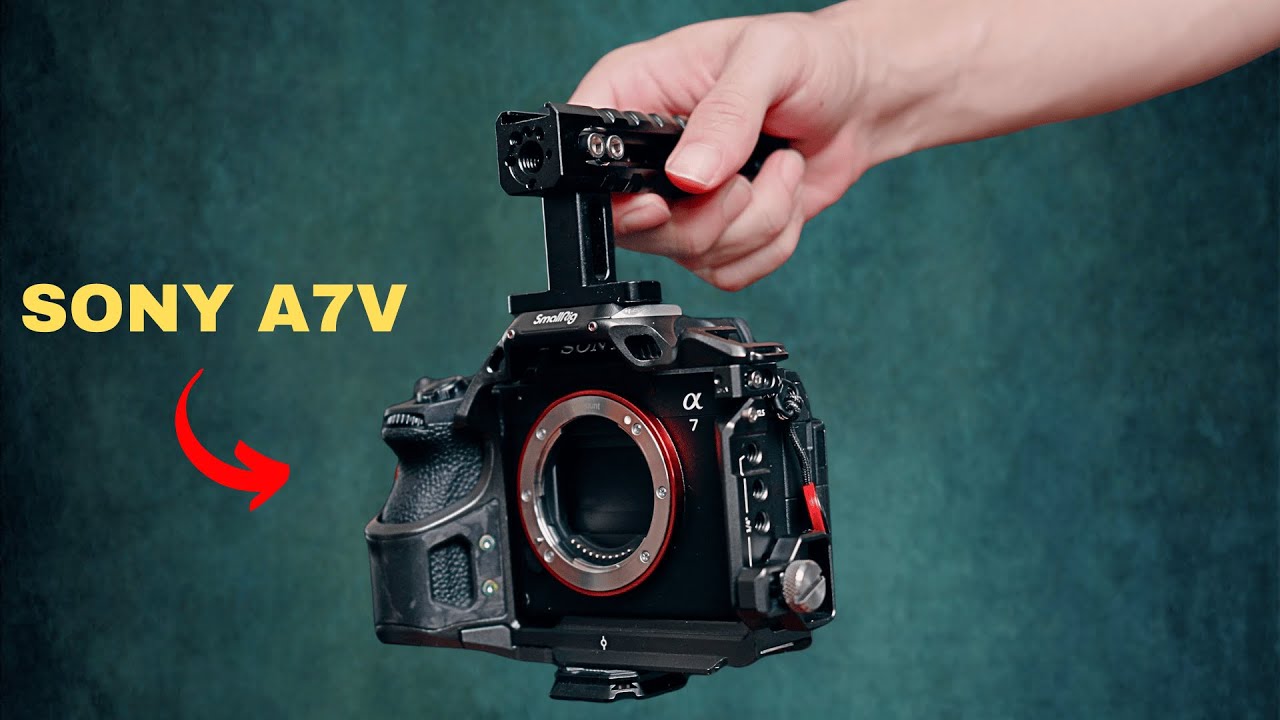
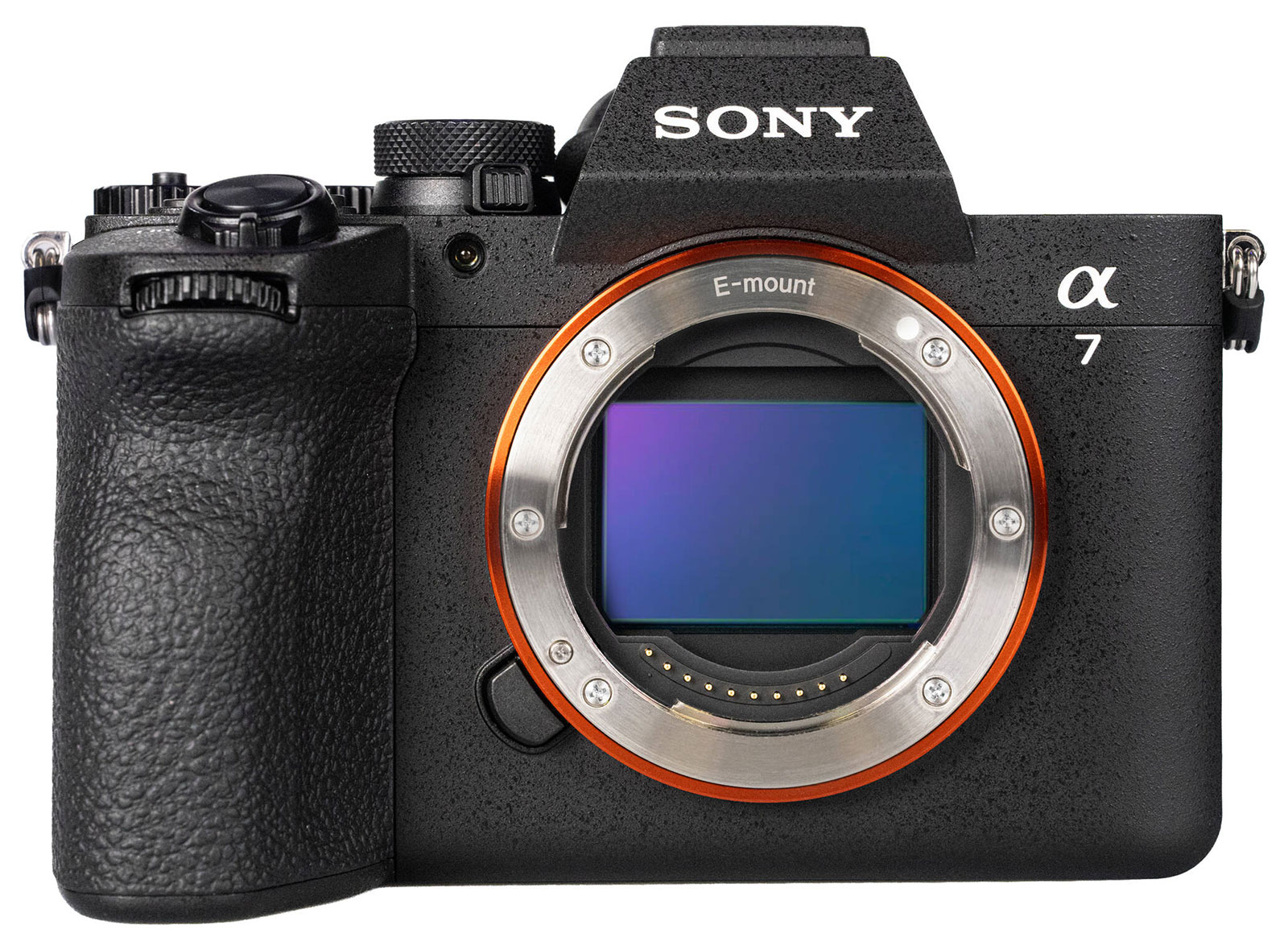
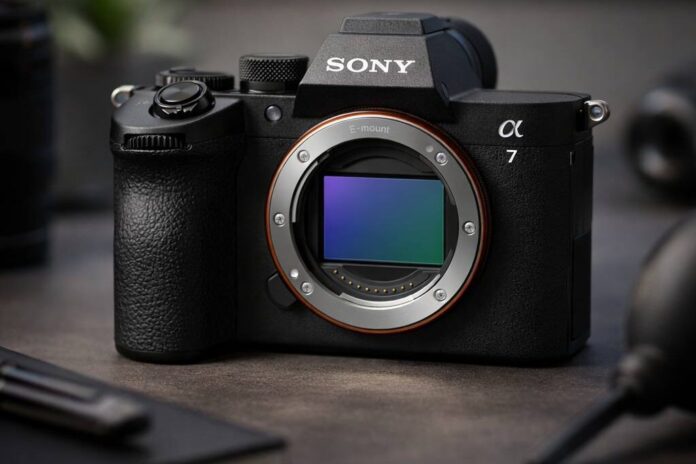
The A7 V wears its A7 IV DNA proudly. The body is an updated version of that platform, which means you get two main command dials up top, a toggle-lockable exposure compensation dial on the shoulder, and a third, somewhat fiddly command dial on the rear plate. After a month of shooting, I can confirm the layout works. It is not revolutionary. It is simply correct. Whatever parameter you care about most – shutter speed, aperture, ISO – you can map it to your fingertips within minutes of unboxing.
But I want to talk about that rear dial. It is small. It is stiff. When you are wearing gloves in winter or shooting in a rush, you will miss it. You will accidentally hit it. Sony knows this. They shipped the A1 with a superior drive/focus mode dial on the top plate, and its absence here feels like a deliberate choice to maintain product hierarchy rather than a design limitation. The handling earns a solid four stars. It loses the fifth because I know Sony can do better.
The video record button placement deserves its own paragraph of criticism. Sony positioned it where a custom function button normally lives. I have pressed it accidentally exactly zero times because it is so poorly placed for intentional use. Why would you do this? It is a baffling decision on a camera marketed to hybrid shooters.
Living With It: Panel Quality & Sunlight Visibility
The multi-angle flip screen is a welcome carryover from the A7 IV. In direct sunlight, it remains legible enough to compose, though you will find yourself cupping your hand around the LCD more often than you would with a brighter panel. The electronic viewfinder, however, tells a different story. I set the EVF frame rate to maximum for smoother tracking, and that single decision destroyed my battery life. Within minutes, I watched the percentage drop from 100% to 92%. After two hours of testing, I was down to 82%. This is unacceptable. We are back in the era of Sony battery anxiety, and no amount of USB-C charging convenience fully compensates for a viewfinder that drinks power like a marathon runner at an aid station.
On paper, the A7 V delivers approximately 630 shots through the viewfinder and 750 through the LCD monitor. That represents a nearly 20% improvement over the A7 IV, which maxed out around 580 shots on the LCD. In practice, those numbers assume you are not hammering the EVF at maximum refresh rate or shooting 30fps bursts that fill the buffer and keep the processor working overtime.
Under Load: Real-World Snappiness Test
Here is where the A7 V earns its keep. The BIONZ XR2 processor paired with that 33-megapixel Exmor RS CMOS sensor delivers genuinely fast performance. The 759-point phase-detection AF system covers approximately 94% of the frame. AI subject recognition now includes Human, Animal, Bird, Insect, Car, Train, and Airplane. In AF-S and AF-A modes, the camera locks on with authority. Touch tracking remains one of the fastest, most intuitive ways to engage a subject. Tap the screen and the camera sticks like glue, even when someone walks through the frame or the scene devolves into chaos.
But AF-C mode exposes cracks in the foundation. Using subject detection with continuous autofocus in near darkness feels nowhere near as intelligent as Sony’s system used to be. The camera used to prioritize searching around the rule-of-thirds intersections. Now it hunts toward the edges of the frame, behind God’s back, in places no competent photographer would compose a subject. I tested this with Sony glass, Tamron lenses, and Viltrox optics. The behavior persists across all of them. With wide-area AF mode, you still need to manually direct the camera to your subject using the autofocus selection setting. The system is not thinking with you. It is wandering.
The buffer situation compounds the frustration. At 30 frames per second in electronic shutter mode, the buffer fills faster than it clears on standard V90 SD cards. You need CFexpress Type A cards to roughly double burst length and significantly improve buffer clearing times. This is an additional cost Sony does not advertise prominently. The cards are expensive. The performance gap between V90 SD and CFexpress Type A is not subtle. It is the difference between a camera that keeps up and one that stutters.
The Friction Points
Let me be direct about what the A7 V cannot do, because these omissions matter more in daily use than any spec sheet suggests. There is no open-gate recording. There is no DCI 4K. There is no internal RAW video. Both the Canon EOS R6 III and Panasonic S1II offer all three. Sony does not. The Nikon Z6 III also includes internal RAW video. For a camera at this price point, positioned as a hybrid tool, these are not niche features. They are baseline expectations in 2025.
Sony also has not implemented exposure assistance tools like a waveform monitor or false color overlay. These are standard on competing bodies. Instead, Sony leans on AI-driven tricks that Canon and Panasonic do not offer. The question is whether algorithmic convenience replaces manual exposure control. For many videographers, it does not.
The dual base ISO system for video is genuinely impressive. You get two great base ISOs at 800 and 8000, which means cleaner footage at higher sensitivities than the previous generation allowed. The higher base jumped from 3200 to 8000. I do not fully understand the technical details of how dual base ISO works for video, but the results speak for themselves. I would love to see this extended to stills photography in the future.
Heat dissipation deserves genuine praise. The sigma-shaped graphite heat sink built into the stabilization unit improves thermal consistency during extended 4K recording. At 68°F, you can record for approximately 90 minutes. At 105°F, you get approximately 60 minutes. No cooling fan. No thermal shutdown. This is engineering worth celebrating.
The angle of view priority mode is required for full-frame 4K 60 and super 35 4K 120. It disables in-camera noise reduction but does not affect dynamic range, image quality, or 4K oversampling. You still get full pixel readout. This is a smart trade-off that prioritizes data integrity over processing convenience.
Focus breathing compensation is present and functional, with metadata available for post-processing workflows. The framing stabilizer ensures stable composition during camera motion. Audio capabilities include 24-bit recording, four-channel audio support, a new audio reference mic for noise reduction, and digital audio via the multi-interface shoe for noise-free signal transmission. Dual USB-C ports allow 4K 30p streaming through one while supplying power through the other. Long-form professional video capture is now genuinely possible without overheating concerns.
But the autofocus situation with third-party lenses remains deeply troubling. I tested the A7 V with Sony, Tamron, and Viltrox lenses, plus a TechArt M-to-E autofocusing adapter. The experience was enlightening and frightening. Sony has historically been open with the E-mount system, allowing licensed manufacturers to develop autofocus lenses. With the A7 V, it feels like an about-face. In AF-C mode, even Tamron lenses and Sony’s own older primes exhibit issues. Subject detection in near darkness with these lenses feels broken. The camera manufacturer is causing this, not the lens makers. Unless you commit exclusively to first-party Sony glass, you are accepting compromised performance.
Birds in flight tracking is slow. The camera misses focus on perched birds more often than it should. For a body with this level of AI subject recognition, the real-world tracking reliability does not match the marketing promise.
What Works
- Stills Performance: 33-megapixel full-frame sensor delivers 16 stops of dynamic range on mechanical shutter with excellent high-ISO performance
- Burst Shooting: 30fps RAW electronic mode with up to one second of RAW pre-capture gives you images you would have missed
- Thermal Management: Sigma-shaped graphite heat sink enables 90 minutes of 4K recording at 68°F without a cooling fan
- Dual Base ISO: Video base ISOs at 800 and 8000 represent a genuine leap in low-light video quality
- Battery Improvement: 750 shots on LCD represents a nearly 20% improvement over the A7 IV
- Touch Tracking: Tap-to-track remains the fastest way to lock onto moving subjects in photo mode
- Fulltime DMF: Direct manual focus override without switching modes is a lifesaver for portraits and macro work
- Custom Zebras: Works beautifully in photo mode for exposing skin tones at around 70% baseline
- Dual USB-C: Stream 4K 30p through one port while charging through the other simultaneously
- Heat Dissipation: No overheating during 4K 60p in either crop or full-frame in reasonable conditions
What Frustrates
- Video Omissions: No open-gate recording, no DCI 4K, no internal RAW video while Canon, Panasonic, and Nikon all offer these
- Exposure Tools: Missing waveform monitor and false color overlay that competitors include as standard
- Third-Party AF: Autofocus performance with Tamron, Viltrox, and adapted lenses is noticeably degraded in AF-C mode
- Buffer Depth: Shallow buffer requires expensive CFexpress Type A cards for sustained 30fps shooting
- Battery Drain: EVF at maximum frame rate causes severe battery drain, dropping 8% in minutes
- AF-C Behavior: Subject detection hunts toward frame edges instead of rule-of-thirds intersections in low light
- Birds in Flight: Tracking is slow and misses focus on perched birds more than expected
- Record Button: Poorly placed where a custom button normally lives, making accidental presses unlikely but intentional ones awkward
- No Redundant Recording: Cannot record video to both cards simultaneously for backup
- DR Boost Missing: No dynamic range boost mode like Panasonic S1II offers by combining sensor gain modes
Configuration Warnings
- Card Selection: V90 SD cards will bottleneck your buffer at 30fps. Budget for CFexpress Type A cards or accept truncated burst lengths
- EVF Frame Rate: Setting the EVF to maximum refresh rate causes severe battery drain. Use standard mode for anything beyond short sessions
- Lens Choice: Third-party autofocus performance is compromised. If AF-C reliability matters, budget for first-party Sony glass
- Angle of View Priority: Required for full-frame 4K 60 and super 35 4K 120. Disables in-camera NR but preserves full pixel readout
- Stabilization Crop: Better IBIS results require digital correction with crop. Factor this into your focal length calculations before shooting
The Sony A7 V is the best A7 camera Sony has ever made. It is also the most frustrating. It delivers still image quality that justifies its price tag entirely on its own. The 16-stop dynamic range, the 30fps RAW bursts, the pre-capture buffering, the thermal endurance – these are not incremental improvements. They are transformational capabilities that change how you shoot.
But the video omissions are not trivial. They are not edge cases. Open-gate recording, internal RAW video, and exposure assistance tools are standard on competing bodies at this price. Sony’s decision to withhold them feels strategic rather than technical. The autofocus degradation with third-party lenses feels like a betrayal of the open E-mount philosophy that built this system.
If you are a still photographer who occasionally shoots 4K wildlife clips for stock, the A7 V will exceed your expectations. If you are a hybrid shooter who needs professional video tools without compromise, you will hit walls. The walls are specific. The walls are avoidable if you stay within Sony’s ecosystem. But they are there, and no amount of AI subject recognition or heat dissipation engineering changes that reality.
I wanted to love this camera without reservation. After 30 days, I cannot. I can respect it. I can recommend it with caveats. I can acknowledge that for the still photographer, it would be unreasonable to ask for much more. But I can also see the gaps, and they are wide enough to drive a Panasonic S1II through.
Tags: Sony A7 V review, Sony A7 V vs Canon R6 III, Sony A7 V video limitations, Sony A7 V autofocus issues, Sony A7 V battery life, Sony A7 V buffer test, Sony A7 V third party lens AF, Sony A7 V long term review, Sony A7 V vs Panasonic S1II, Sony A7 V open gate missing, Sony A7 V dynamic range test, Sony A7 V heat dissipation, Sony A7 V dual base ISO, Sony A7 V birds in flight, Sony A7 V CFexpress Type A