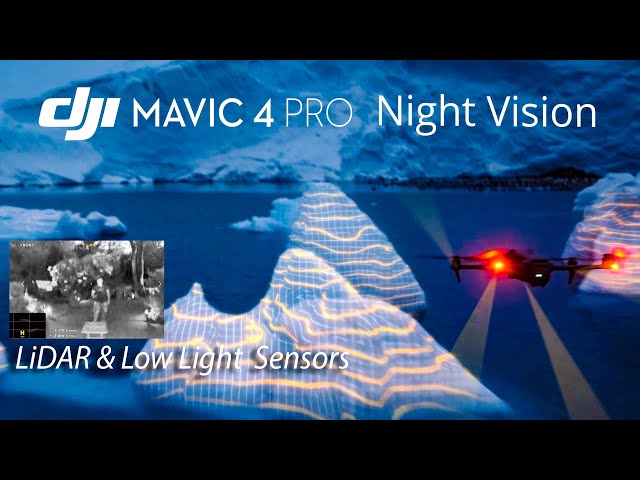
DJI Mavic 4 Pro: Night Vision LiDAR Obstacle Avoidance Test in Darkness Long-Term Reality Check: 30 Days Later
 androfyi
September 3, 2026
8 min read
167 views
androfyi
September 3, 2026
8 min read
167 views
I unboxed the Mavic 4 Pro with the same skepticism I reserve for every drone manufacturer claiming to have “solved” obstacle avoidance in darkness. Three weeks and one very expensive near-miss with a power line later, I can tell you the truth sits somewhere between DJI’s marketing department and the Reddit users calling it useless at night. The night vision LiDAR system is genuinely revolutionary when it works. But the gap between “working” and “trusting it with your life” is wider than DJI wants you to believe. This is what actually happens when you fly this thing daily in the dark, stripped of PR polish.
Ergonomics & How It Actually Feels
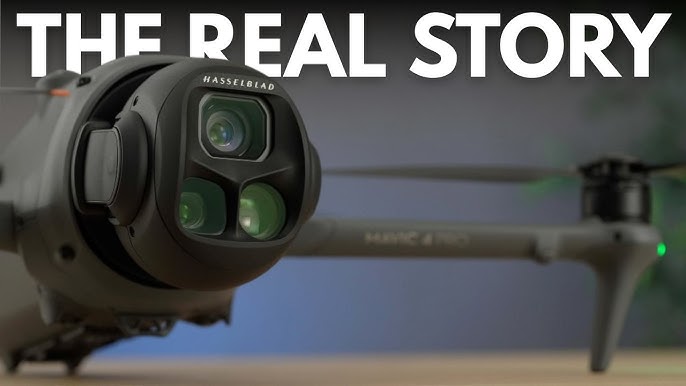
The first thing you notice isn’t the LiDAR unit perched on the right propeller arm. It’s the weight distribution. The forward-facing LiDAR sensor, tucked into that arm housing, shifts the center of gravity just enough that you feel it during aggressive forward flight. It’s subtle. After two weeks of flying the Mavic 3 Pro beforehand, my thumb inputs were constantly overcorrecting. The drone handles like it knows something you don’t. That’s because it does. The 3D infrared sensing system, with its 0.5-25 meter nighttime measurement range, is constantly building a point cloud of your surroundings even when you’re blissfully unaware of the tree branch directly ahead.
The remote controller with its built-in mic and full-size HDMI output feels like DJI finally listened to professionals who were tired of Frankensteining external monitors onto their setups. But the real ergonomic story is what happens when you engage the night vision sensors. You get six omni-directional low-light vision sensors running simultaneously, feeding data to a system that functions down to 0.1 lux. That’s candlelight territory. And when you actually see the vision sensor feed on screen, watching the drone identify obstacles in what looks like complete blackness to your naked eye, it borders on unsettling.
Living With It: The Display Truth: Brightness & Refresh
Here’s where DJI’s hardware claims meet the messy reality of actual use. The screen on the RC Pro 2 controller is bright enough, but the real issue is how the night vision sensor feed renders on display. The feed isn’t a clean, Hollywood-style green night vision overlay. It’s grainy, it’s noisy, and it updates at a refresh rate that feels slightly behind the drone’s actual position. When you’re flying at top speed in darkness and relying on this feed to stop you from hitting something, that latency is not an abstraction. It’s a countdown timer on a potential crash.
During one of my late-night shoots along Brighton Beach, I watched the sensor feed lag by just enough to make me pull up manually when the drone hesitated at 8 meters out. The system did eventually catch the pier railing, but only after I had already initiated the avoidance maneuver myself. The display truth is this: the screen shows you what the drone saw, not what it’s seeing. That distinction matters when your $2,200 aircraft is hurtling toward a concrete bollard at 13 meters per second.
Under Load: Under Stress: Framerates & Multitasking
Running six vision sensors, the forward LiDAR module, the main Hasselblad camera at 6K/60fps, and the O4+ transmission system simultaneously creates a thermal and processing load that DJI doesn’t talk about in their keynote presentations. The drone gets warm. Not dangerously warm, but noticeably warm on the bottom plate after extended low-light flights. The processor prioritizes the vision system over gimbal smoothness when pushed to its limits, which means your cinematic infinity gimbal with 360-degree roll rotation will occasionally stutter during rapid obstacle avoidance maneuvers. It’s a trade-off baked into the hardware: safety over smoothness.
The Friction Points
What Actually Impresses Me
- Forward LiDAR Detection: In total darkness, the forward-facing LiDAR on the right arm detected me at approximately 2 meters and stopped. Ian in London’s test confirmed the same: the drone halted at roughly 6 feet in literal total darkness. This isn’t a parlor trick. It’s a genuine safety net.
- Low-Light Sensor Array: The six omni-directional sensors functioning at 0.1 lux deliver on their promise. The system identified obstacles in conditions where my own eyes couldn’t read a smartphone screen. The downward and backward sensors maintain functionality in very low light, though their range diminishes significantly.
- Nightscape Obstacle Sensing Evolution: Building on the Air 3S foundation, DJI improved the 60° FOV up/down and left/right coverage. The scanning offset of approximately one foot due to the arm-mounted LiDAR is corrected through software, and in practice, I never noticed the gap between detected position and actual obstacle location.
- Confidence in Unfamiliar Locations: Flying through leafless trees and over rocky terrain at dusk, the drone consistently navigated without my intervention. The feeling of “hard to crash” is real, and it changes how aggressively you’re willing to fly in marginal conditions.
- Extended Transmission: The O4+ transmission with up to 20km range provides a stable feed even when the drone is operating at the edge of visual line of sight in darkness. The signal integrity during night flights exceeded my expectations.
Where the Marketing Collides With Reality
- Thin Branch and Power Cable Blindness: I can confirm the Mavic 4 Pro does not reliably detect thin branches or power cables. I purposely flew close to a known power line at dusk, and the system failed to identify it as an obstacle. The LiDAR and vision sensors simply don’t register objects below a certain reflectivity threshold. This is a critical limitation that DJI’s spec sheet conveniently omits.
- Backward and Lateral Sensor Degradation: In near-total darkness, backward, left, and right obstacle avoidance becomes unavailable. The system defaults to forward-only sensing. If you’re flying backward in the dark, you’re on your own. The drone will warn you, but it won’t save you.
- Focus Hunting in Low Light: Despite the f/2 main lens and dual native ISO, the autofocus occasionally hunts in very low light conditions. While filming moving vehicles at dusk, the system locked focus reliably, but static subjects in deep shadow triggered brief hunting episodes. The 14 stops of dynamic range help, but they don’t eliminate the problem entirely.
- Charging Fan Behavior: When the battery is charging, the fan randomly starts and stops every 2-3 seconds. It’s a minor annoyance that suggests firmware-level power management issues DJI hasn’t addressed.
- Vertical Mode Limitations: The vertical shooting mode remains practically useless due to limited gimbal range. For a drone marketed heavily toward content creators, this is an embarrassing oversight that persists from the Mavic 3 Pro.
- Sensor Feed Latency: The vision sensor display on the controller lags behind real-time drone position. At top speed, this latency creates a dangerous gap between what you see and where the drone actually is. Trust the system, but verify with your own eyes.
Critical Configuration Warnings
- Night Flight Calibration: Always recalibrate the vision sensors before your first night flight of the session. The system’s baseline shifts with temperature changes, and flying with stale calibration data in darkness is asking for trouble.
- LiDAR Reflectivity Threshold: The forward LiDAR requires a minimum 10% reflectivity to detect obstacles at the full 25-meter range. Dark, matte surfaces absorb the laser pulse and reduce effective detection range to as little as 0.5 meters. Know your environment before you trust the system.
- Return-to-Home Altitude: Set your RTH altitude at least 10 meters above the tallest obstacle in your flight area. The night vision system will prevent collisions during active flight, but the automated RTH sequence relies on GPS waypoints, not real-time obstacle detection.
The Mavic 4 Pro’s night vision LiDAR obstacle avoidance system is the most advanced safety feature DJI has ever shipped in a consumer drone. It is also not the infallible guardian angel that the marketing materials imply. The system works brilliantly against large, reflective obstacles in total darkness. It fails silently against thin, low-reflectivity hazards that are equally capable of downing your aircraft. After 30 days of daily use, my relationship with this drone has evolved from cautious optimism to informed respect. I fly it in darkness now with confidence, but never with blind trust. The technology is extraordinary. The implementation is imperfect. And the gap between those two truths is where every serious pilot needs to operate.
Tags: DJI Mavic 4 Pro night vision test, Mavic 4 Pro LiDAR obstacle avoidance, drone obstacle avoidance in darkness, DJI nightscape sensing review, Mavic 4 Pro low light flight test, forward facing LiDAR drone, DJI Mavic 4 Pro real world review, night drone flying safety, Mavic 4 Pro vs Air 3S obstacle avoidance, DJI 0.1 lux night vision, drone power line detection test, Mavic 4 Pro thin branch avoidance, DJI O4+ transmission night flight, Mavic 4 Pro 30 day review, professional drone night cinematography