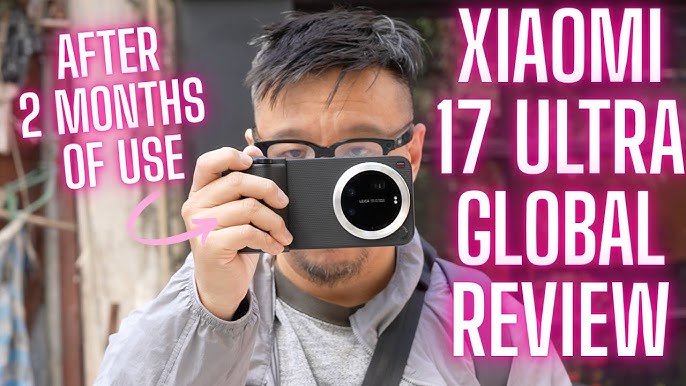
Is the Xiaomi 17 Ultra Review After 2 Months* Overhyped? A Direct Comparison
 androfyi
August 29, 2026
9 min read
94 views
androfyi
August 29, 2026
9 min read
94 views
Let’s cut through the smoke. The Xiaomi 17 Ultra arrives in 2026 wearing a price tag that screams invincibility, boasting a 1-inch main sensor, a variable aperture periscope zoom that shifts between 75mm and 100mm, and a Snapdragon 8 Elite Gen 5 chipset that benchmark apps weep over. But two months of real-world usage – a month and a half on the China Leica edition followed by two weeks on the global standard Ultra – exposes where the marketing gloss peels away. The camera system is nearly identical across both models, which means my findings translate directly. This is not a spec-sheet regurgitation. This is what happens when you actually live with a phone that costs north of $1,500 and competes against the Samsung Galaxy S25 Ultra, the Oppo Find X9 Pro, and the Vivo X300 Pro. Spoiler: the “Ultra” label is earned in some places and borrowed in others.
Design Language Broken Down
Xiaomi made a deliberate pivot from the quad-curved display of the 15 Ultra to a completely flat panel flanked by a flat-edged frame. If you loved the 15 Ultra’s curves, this change stings. The new geometry sits closer to iPhone territory, and while it improves grip stability for flat-surface typing, it sacrifices the ergonomic slide into the palm that curved screens deliver. At over 210 grams (some units clock 224g on the scale), this is a top-heavy slab that announces itself in your jeans pocket. Tech Spurt called it “incredibly chunky,” and after extended one-handed use, that assessment holds water.
The bezels are razor-thin and perfectly symmetrical, which gives the front profile a satisfying uniformity. The 6.9-inch AMOLED panel pumps out over 3,000 nits of peak brightness, and I can confirm it remains legible under direct sunlight. Color accuracy is genuinely impressive – the Colorchecker dE 2000 average sits at 1.12, which trounces the Galaxy S25 Ultra’s 3.1. But here’s the tradeoff the spec sheets bury: the display resolution is 2608×1200 at 416 PPI. Compare that to the S25 Ultra’s 3120×1440 at 498 PPI or the outgoing 15 Ultra’s 3200×1440. In isolation, the panel looks sharp enough. Place it next to a Quad HD rival, and the gap becomes visible if you hunt for it.
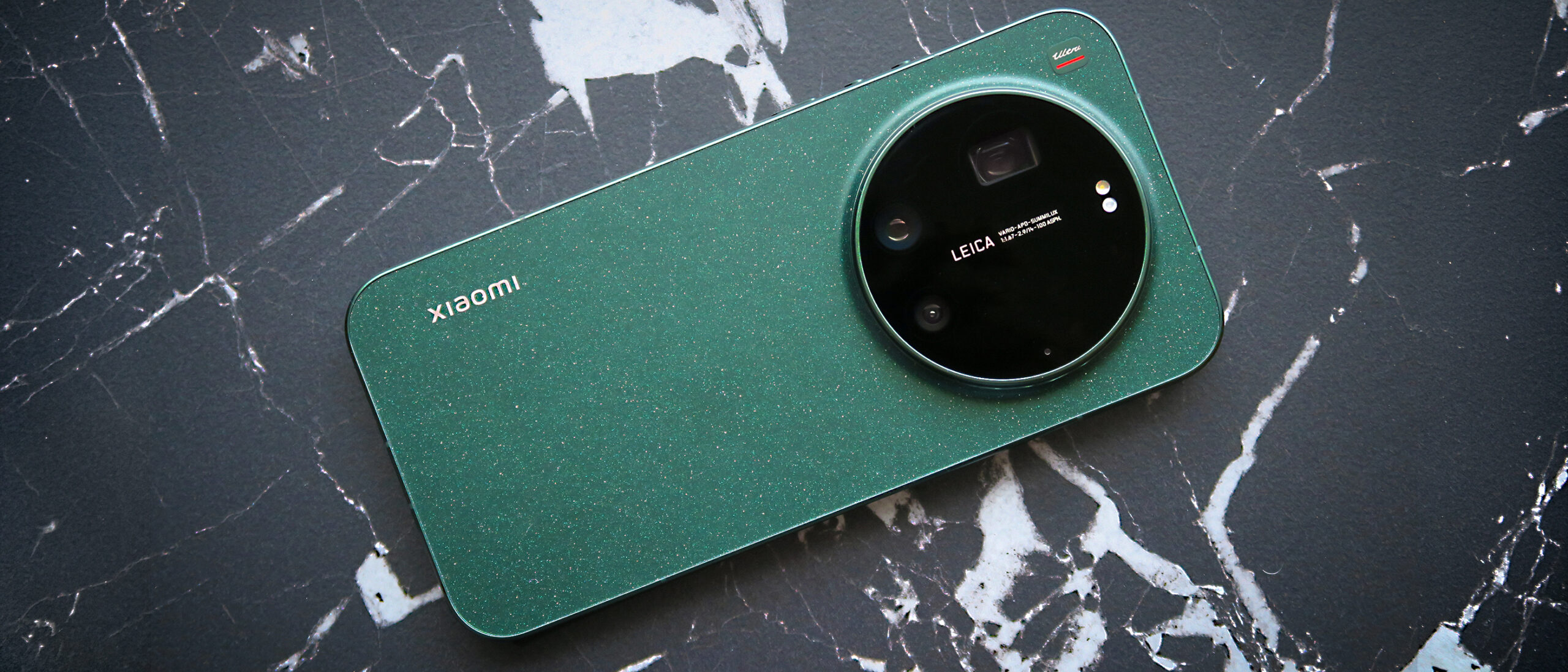
The stereo speakers use a bottom-firing grill and a hidden earpiece slit. They are not symmetrical in output, and the absence of a dedicated top-firing speaker means you lose some audio balance when holding the phone in landscape mode. For a device at this price, that’s an oversight. The global launch palette includes green, black, and white. The green is polarizing at best and garish at worst – I’d steer toward black for sanity. There’s also a Leica edition with a dual-tone finish and a mechanical zoom ring, but the standard Ultra is what most global buyers will encounter.
Low-Light Extraction & Color Science
The 1-inch type main sensor is the undisputed star of this device, and it is the singular reason I would recommend the 17 Ultra to photography-first buyers. Dynamic range operates on a different plane entirely – shadow recovery is deep without veering into artificial HDR territory, white balance holds steady across mixed lighting, and color reproduction remains authentic in the default “Vibrance” mode. Switch to the overly processed “Authentic” mode and the images mute into something that looks like a corporate press release. Stay with Vibrance.
The periscope zoom is where the 17 Ultra flexes hardest against the Vivo X300 Pro and Oppo Find X9 Pro. Color accuracy matches the main camera, clarity is exceptional, and the variable aperture between 75mm and 100mm gives you mechanical control over depth of field that competitors can only simulate computationally. In daylight, this telephoto module produces shots that rival dedicated cameras. In low light, the extraction is strong but not flawless – Vivo’s X300 Pro still holds a slight edge in noise control at extreme zoom ranges, and Huawei’s processing pipeline remains the gold standard for computational photography. Xiaomi’s image processing has improved, but multiple reviewers and users note it still trails behind Vivo and Huawei in post-processing finesse. The hardware captures data at lower ISO values with less noise, but the software renders it in a way that looks flatter than it should.
Video performance is a genuine leap forward. The main sensor captures 4K 120fps Dolby Vision, which is a feature set no competitor currently matches. Even the ultrawide video output represents a significant upgrade over previous Xiaomi Ultra devices. Stabilization is decent at 120fps, though you’ll feel every micro-movement – dropping to 60fps smooths this out considerably. For vlogging and run-and-gun content creation, this is the most capable Android video package available today.
The Nuance: Xiaomi 17 Ultra Review After 2 Months* vs The Competition
Let’s talk structural tradeoffs rather than benchmark bragging rights. The AnTuTu v10 score of 2,777,490 places the 17 Ultra ahead of the Oppo Find X9 Pro (2,719,560) and the outgoing 15 Ultra (2,661,565), but behind the Vivo X300 Pro (2,982,875) running the Dimensity 9500. In real-world gaming – Genshin Impact, Wuthering Waves, Call of Duty – the Snapdragon 8 Elite Gen 5 delivers consistent frame rates with a maximum surface temperature of 46.8°C under sustained load. That’s warm but not throttling territory. Thermal management is genuinely excellent.
Battery life is where opinions fracture. The 6,800mAh cell sounds massive on paper, and some users report “brilliant” endurance. Others call it “average” and “not mind-blowing.” The discrepancy likely stems from display resolution scaling and background app behavior. HyperOS 3’s aggressive RAM management kills background processes faster than OxygenOS or ColorOS, which can save battery but also means apps reload more frequently. It’s a tradeoff between longevity and multitasking fluidity, and Xiaomi chose longevity. Whether that’s the right call depends on your workflow.
The software support pledge – five OS updates and six years of security patches – is an improvement but still trails Samsung and Google’s seven-year commitments. HyperOS 3 itself is a mixed bag. The customization options are extensive, the AI dynamic wallpapers are a fun gimmick, and the overall experience is smoother than previous iterations. But the learning curve is real, and the interface still carries design choices that feel like they were approved by committee rather than curated by a single vision. If you’re migrating from a Pixel or iPhone, expect a two-week adjustment period.
The ultrasonic fingerprint reader is fast and accurate, but its adoption killed the traditional heart rate sensor that sat under previous optical readers. Xiaomi’s workaround uses the LED flash and a camera sensor on the back, requiring you to stretch your finger across both. It works, but it’s finicky and feels like a solution designed to check a spec-sheet box rather than serve actual health tracking needs. The IP69 rating on the China model drops to IP68 on the global version – still excellent, but don’t blast it with high-pressure hot water jets expecting a warranty claim to survive.
The Definitive Buy vs Pass Factors
- Camera Hardware: The 1-inch main sensor and variable aperture periscope are class-leading. If mobile photography is your primary purchase driver, this is the Android phone to beat in 2026.
- Display Brightness: Over 3,000 nits peak with a Colorchecker dE 2000 average of 1.12. Outdoor visibility is exceptional, and color accuracy destroys the Galaxy S25 Ultra in lab testing.
- Video Capability: 4K 120fps Dolby Vision on the main and periscope sensors is unmatched. No other flagship offers this combination of resolution, frame rate, and HDR capture.
- Thermal Management: Maximum 46.8°C under sustained gaming load. The Snapdragon 8 Elite Gen 5 runs hot in other devices; Xiaomi’s thermal solution keeps it in check.
- Build Quality: Flat-frame design with symmetrical bezels and IP68/IP69 rating. It feels premium, even if the green colorway misses the mark.
- Display Resolution: 2608×1200 at 416 PPI is a step down from the 15 Ultra’s 3200×1440 and well behind the S25 Ultra’s 3120×1440. It’s fine in isolation, but at this price, “fine” isn’t good enough.
- Speaker Asymmetry: Bottom-firing plus earpiece is not a true stereo setup. Landscape media consumption suffers from imbalanced audio output.
- HyperOS Learning Curve: The software is improved but still lags behind OxygenOS and ColorOS in polish and intuitiveness. Aggressive RAM management kills background apps faster than competitors.
- Software Support Gap: Five OS updates and six years of security patches is better than Xiaomi’s past, but Samsung and Google offer seven years. At $1,594, that gap matters.
- Image Processing: Hardware captures data at lower ISO with less noise, but the post-processing pipeline still trails Vivo and Huawei. The photos are technically excellent but computationally flatter than they should be.
Critical Configuration Warning: The global version ships with IP68 rating, not IP69. The China Leica edition carries IP69. If you specifically need the higher water-jet resistance rating, you’ll need to import the China model, which introduces warranty and band-compatibility complications. Additionally, the 12GB RAM configuration may exacerbate the aggressive background app killing – opt for the 16GB variant if available in your region.
The Xiaomi 17 Ultra is the most refined Ultra Xiaomi has ever produced, and its camera system genuinely rivals dedicated photography equipment. But “Ultra” is a marketing word, and the reality is more nuanced. The display resolution regression, the speaker asymmetry, the software support gap, and the image processing that still trails Vivo’s computational pipeline – these are not dealbreakers, but they are compromises at a price point where compromises should not exist. If you prioritize camera hardware and video capability above all else, buy this phone without hesitation. If you want the most balanced flagship experience in 2026, the Vivo X300 Pro and Samsung Galaxy S25 Ultra remain formidable alternatives that don’t ask you to overlook as many corners.
Tags: Xiaomi 17 Ultra review, Xiaomi 17 Ultra camera test, Xiaomi 17 Ultra vs Samsung Galaxy S25 Ultra, Xiaomi 17 Ultra vs Vivo X300 Pro, Xiaomi 17 Ultra battery life, Xiaomi 17 Ultra display resolution, Xiaomi 17 Ultra long term review, Xiaomi 17 Ultra Snapdragon 8 Elite Gen 5, Xiaomi 17 Ultra low light photography, Xiaomi 17 Ultra video recording, Xiaomi 17 Ultra HyperOS 3, Xiaomi 17 Ultra price comparison, Xiaomi 17 Ultra pros and cons, Xiaomi 17 Ultra vs Oppo Find X9 Pro, Xiaomi 17 Ultra 2 months later