I Swapped My Old Device for the DJI Mavic 4 Pro LONGTERM Review: Built for People Who Actually Fly: My Experience
 androfyi
April 27, 2026
4 min read
338 views
androfyi
April 27, 2026
4 min read
338 views
Nine months ago, I unboxed the DJI Mavic 4 Pro with cautious optimism. I’d flown every Mavic since the Phantom 3 Advanced, and while specs looked solid on paper, I’ve learned that true value only reveals itself after countless sunrises, windy ridge lines, and midnight cityscapes. This isn’t a drone that wows you on day one – it wins you over slowly, quietly, every time you reach for it instead of your older gear. Because when the light gets tricky or the shot demands precision, the Mavic 4 Pro doesn’t just perform – it anticipates.
Unboxing & Aesthetics & Durability
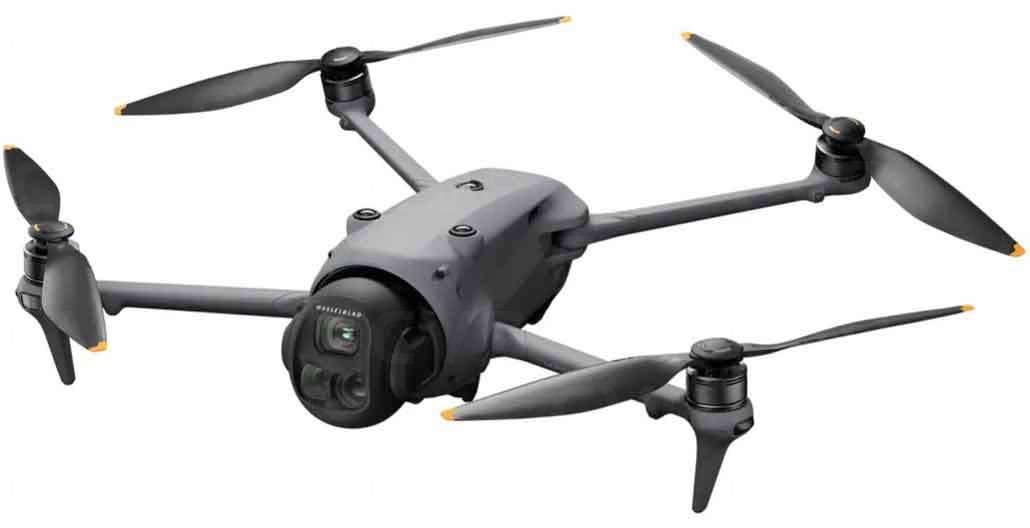
The Mavic 4 Pro feels immediately more substantial than its predecessor – 1,065 grams of refined engineering wrapped in DJI’s signature folding-arm design. It’s not compact like the Mini series, but it fits comfortably in a camera backpack alongside lenses and batteries. The new dome-shaped gimbal housing adds subtle protection without bulk, and the arms unfold smoothly (in any order!) with that satisfying auto-power-on click. Build quality is rock-solid – no creaks, no flex, just confidence-inspiring rigidity. Yes, it tips into Europe’s C2 regulatory category, which means extra paperwork and flight restrictions in some zones. But if you’re serious about aerial cinematography, that’s a trade-off worth making.
24 Hours Later: Visuals & Brightness
The first thing that stunned me wasn’t the camera – it was the controller. The DJI RC Pro 2’s 7-inch screen hits 2000 nits peak brightness (1600 sustained), making midday Colorado sunsets look crisp and color-accurate. The rotatable, tilt-adjustable display stays visible whether you’re holding it landscape for framing or portrait for menu diving. And that new dial? Genius. Tweak ISO, shutter, or aperture mid-flight without taking your eyes off the scene. Paired with O4+ Video Transmission, the signal stayed locked through dense pine forests and urban canyons – no glitches, no lag, just buttery-smooth 10-bit HDR feed up to 30 km.
One Week Later: Performance Test
Real flight time hovers around 35 minutes in moderate wind – not the claimed 51, but still class-leading. In Sport Mode, it hits a realistic 90 km/h, slicing through gusts that would ground lesser drones. But the real revelation? Low-light performance. At blue hour, the 4/3” Hasselblad sensor with Dual Native ISO Fusion pulls astonishing detail from near-darkness. I shot a midnight harbor scene at 0.1 lux – yes, literally moonlight-level – and the footage was clean, dynamic, and cinematic. Obstacle sensing worked flawlessly too: forward-facing LiDAR mapped buildings during night RTH, avoiding collisions even when GPS was spotty. This drone doesn’t just fly – it thinks.
The Bottom Line
| Image Quality | ★★★★★ |
| Flight Performance | ★★★★★ |
| Low-Light Capability | ★★★★★ |
| Value for Pros | ★★★★☆ |
| Beginner Friendliness | ★★☆☆☆ |
Pros & Cons
- Incredible low-light performance: 0.1-lux night sensing delivers usable, noise-free footage where others fail.
- 100MP Hasselblad photos: Not a gimmick – these files hold up to heavy cropping and professional printing.
- Triple-lens versatility: The 70mm and 168mm telephotos enable cinematic compression and subject isolation impossible on single-camera drones.
- O4+ transmission & LiDAR RTH: Rock-solid signal and intelligent return-to-home even in complex urban environments.
- 6K/60fps All-I codec (Creator Combo): A post-production game-changer for colorists and editors.
- Heavy for regulations: At 1,065g, it’s C2-class in Europe – more paperwork, fewer casual flight zones.
- Pricey Creator Combo: The RC Pro 2 + All-I codec bundle costs significantly more than standard kits.
- Overkill for hobbyists: If you mostly shoot casual landscapes or social clips, you’re paying for unused potential.
- Large file sizes: 6K All-I eats storage fast – you’ll need fast SSDs and a capable editing rig.
Tags: DJI Mavic 4 Pro, longterm review, aerial photography, low-light drone, triple camera drone, Hasselblad drone, O4+ transmission, LiDAR obstacle sensing, 6K video drone, professional drone, C2 regulated drone, RC Pro 2 controller, cinematic drone, flight performance, real-world testing