Is the Razer Blade 16 (2026) Review: A Gaming Laptop You Can Actually Call ‘Portable’ Overhyped? A Direct Comparison
 androfyi October 28, 2026 4 min read 0 views
I am tired of gaming laptops that require a forklift to move and a second mortgage to purchase. The market is flooded with 6-pound bricks that throttle the second you unplug them. Enter the Razer Blade 16 (2026), a machine that costs anywhere between $3,499 and a staggering $5,599 depending on your configuration, directly battling the $3,699 Asus ROG Zephyrus G16 and the $3,299 Lenovo Legion Pro 7i Gen 10. Razer wants you to believe you can have a 175W RTX 5090 in a chassis thinner than a MacBook Pro. I spent a month with this $4,900 beast, and I am here to tell you whether that slim promise is just PR fluff or actual engineering reality.
Form Factor & Daily Handling
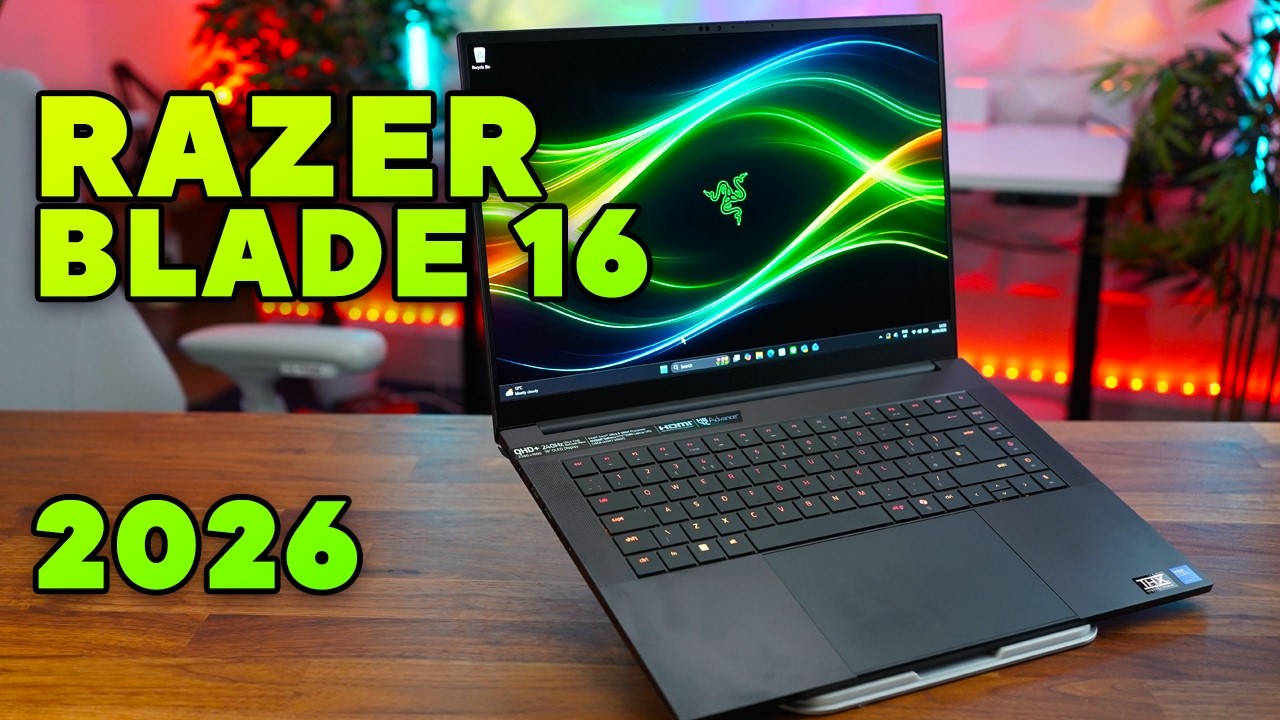
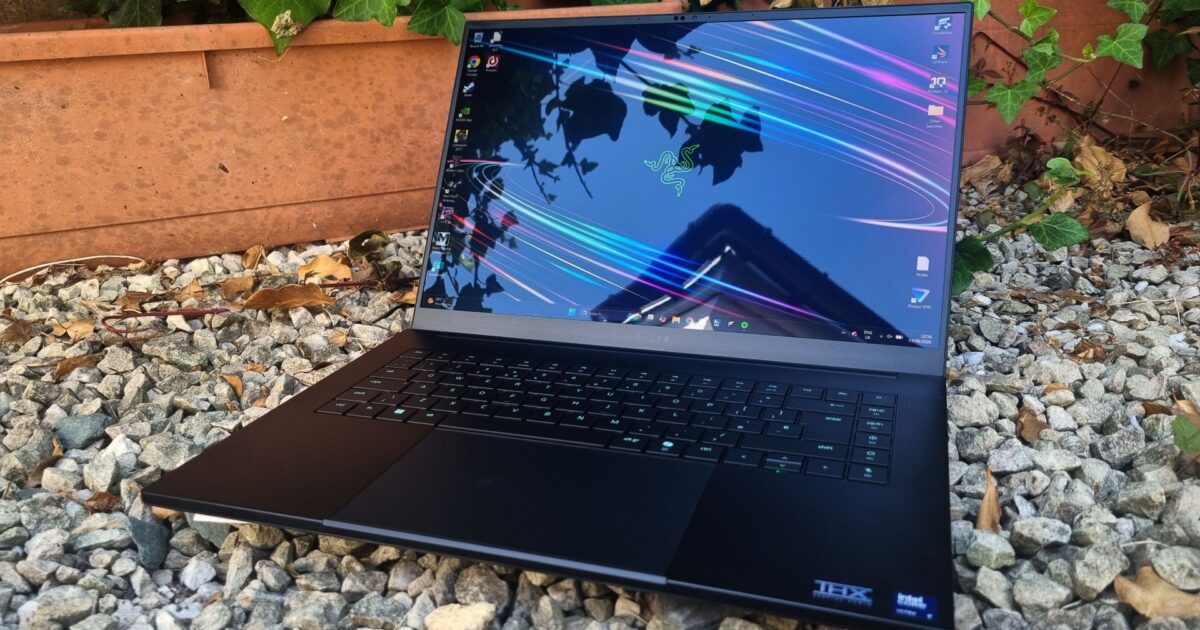
Razer kept the 0.59-inch thickness identical to last year’s model. Before you yawn at a spec that didn’t change, consider this: a 16-inch MacBook Pro is 0.66 inches tall. Razer managed to cram a vapor chamber and a thermal hood into that slimmer profile. I actually squeezed the Blade 16 into my backpack’s laptop holder without performing a yoga pose. I cannot say the same for the vast majority of 16-inch gaming laptops I have tested recently. At 4.6 lbs (2.14 kg), it is shockingly light. You can use it on your lap, but after closing DOOM, the aluminum shell distributes heat well enough that it merely warms your legs rather than branding them.
Low-Light Extraction & Color Science
The 240Hz OLED panel is simply one of the best sub-4K laptop screens available. Razer claims 100% DCI-P3 color gamut coverage, and the VESA TrueBlack HDR1000 certification means it peaks at 1,100 nits. Translation: this screen is bright enough for outdoor use and perfectly dark for your dedicated gamer gopher hole. Reflections can be an issue on the glossy panel, but the brightness usually overpowers them. There is a catch with the 240Hz variable refresh rate via G-Sync. You will only hit the top-end refresh rate if you play at low graphics settings and resolutions below the native 2,560 x 1,600. I hit 240 fps in Zero Parades: For Dead Spies, but that certainly does not matter for a game about slowly strolling, talking to people, and feeling depressed about it.
The Nuance: Razer Blade 16 (2026) Review: A Gaming Laptop You Can Actually Call ‘Portable’ vs The Competition
Unpacking concrete structural tradeoffs rather than raw tech numbers reveals where the Blade 16 truly stands against the Asus ROG Zephyrus G16 (2026) and Lenovo Legion Pro 7i Gen 10. The Blade 16 runs an RTX 5090 at 175W, whereas the Zephyrus G16 runs an RTX 5080 at 135W. In real-world gaming at 1600p, the Blade 16 averages 112 FPS with a 1% low of 75 FPS, compared to the Zephyrus’s 95 FPS average and 79 FPS 1% low. The Intel Panther Lake Core Ultra 9 386H and the fastest laptop RAM available (LPDDR5X-9600, soldered) help, but owners report startup-freeze glitches and benchmark scores slightly below the 2025 Blade 16. Thermals are rated significantly improved, with the 175W GPUs running cooler than the 2025 model and sustaining 150–165W, but you still almost require a cooling pad to maintain peak performance.
The Definitive Buy vs Pass Factors
- Chassis: Exceptionally slim at 0.59 inches, easily fits in a standard backpack sleeve.
- Display: Gorgeous 240Hz OLED with VESA TrueBlack HDR1000 and 100% DCI-P3.
- Thermals: 175W GPUs run cooler than the 2025 model, sustaining 150–165W effectively.
- Keyboard: Satisfying travel distance and a layout that does not feel cramped.
- Battery: Lasts most of the workday, a rarity for gaming laptops.
- Price: Ranges from $3,499 to $5,599, making it a gag-worthy investment.
- Trackpad: Oversized and unresponsive, frequently getting in the way during use.
- Audio: Middling sound quality that fails to match the premium price tag.
- VRR Caveats: You only hit 240Hz at low settings and resolutions below max.
- Upgradability: RAM is soldered LPDDR5X-9600, offering no future upgrades.
- Software: Synapse software glitches continue to plague the experience.
- Hardware: Some units returned for startup-freeze glitches and motherboard voltage errors.
- Performance: Stuttering issues and frame drops due to system overheads.
- Power Brick: The AC adapter weighs 861 grams, offsetting the 2.1 kg chassis.
Tags: Razer Blade 16 2026 review, RTX 5090 gaming laptop, portable gaming laptop 2026, Razer Blade 16 vs Asus ROG Zephyrus G16, Razer Blade 16 price, Panther Lake gaming laptop, 240Hz OLED laptop, Razer Blade 16 thermals, best gaming laptop 2026, thin and light gaming laptop, Razer Blade 16 trackpad issues, LPDDR5X-9600 laptop, gaming laptop battery life, Razer Blade 16 startup freeze, Intel Core Ultra 9 386H