Smartphones are poised to reshape your 2026 choices; this guide helps you compare flagships like the Samsung Galaxy S26 Ultra with its massive AI processing leap and 60W fast charging, Apple’s iPhone 18 with on-device A20 AI, Apple’s first foldable, Google’s Pixel 11 focused on AI, and Samsung’s Z Fold 8 — and assess the privacy and security risks these advances may bring to your data.
Samsung Galaxy S26 Ultra
The Samsung Galaxy S26 Ultra, expected in January or February 2026, is poised to be the first major Android flagship of the year. If you follow flagship cycles, you’ll notice Samsung pushing a brighter, more color-accurate display and faster 60W charging, while shipping either the Snapdragon 8 Elite Gen 5 (or Exynos 2600 in some regions) to deliver a significant leap in on-device processing. You should expect software and camera upgrades that lean heavily into AI, shifting many editing and enhancement tasks from the cloud onto your phone.
For you, that means faster, smarter features out of the box and a device designed to showcase new AI-driven workflows. The S26 Ultra is being positioned as a platform for advanced mobile photography and generative tools, so your experience will likely focus on automated image improvement, real-time adjustments, and deeper system-level AI integration.
Snapdragon 8 Elite Gen 5
The Snapdragon 8 Elite Gen 5 is rumored to power many S26 Ultra units, bringing a massive leap in AI processing and expanded neural engine capabilities that let you run complex models locally. You’ll notice improvements in multitasking, gaming, and especially AI-driven camera and assistant features because the chipset emphasizes both throughput and latency reductions for on-device inference.
Those gains also translate into improved performance and energy efficiency for typical use, but you should be aware that pushing advanced AI workloads can generate more heat under sustained load, which may affect throttling and battery life during prolonged heavy use. Firmware and thermal tuning will determine how much this impacts your day-to-day.
AI-driven camera features
The S26 Ultra’s camera suite is expected to center on AI-driven capabilities that make complex edits and enhancements accessible immediately on your device. You’ll get features like real-time subject segmentation, computational zoom, multi-frame fusion for low light, and generative editing tools that let you change backgrounds, relight faces, or remove objects with minimal input.
Because much of this processing is likely to run on the phone, you’ll enjoy lower latency and better privacy since images can be processed locally, but you should also be cautious: generative edits can produce unnatural results and may sometimes misrepresent scenes, which can be misleading if you rely on automatic corrections for important images.
More info on AI camera features: the S26 Ultra is expected to combine sensor improvements with on-device neural processing to deliver faster, smarter photo and video workflows that put control in your hands. You can expect automated scene-aware settings, one-tap generative fixes, and improved stabilization powered by the chipset’s neural engine; however, the trade-offs include higher CPU/GPU use, potential thermal throttling, and new privacy considerations depending on how Samsung implements data handling and backup for AI-processed assets.
Apple iPhone 18 Series
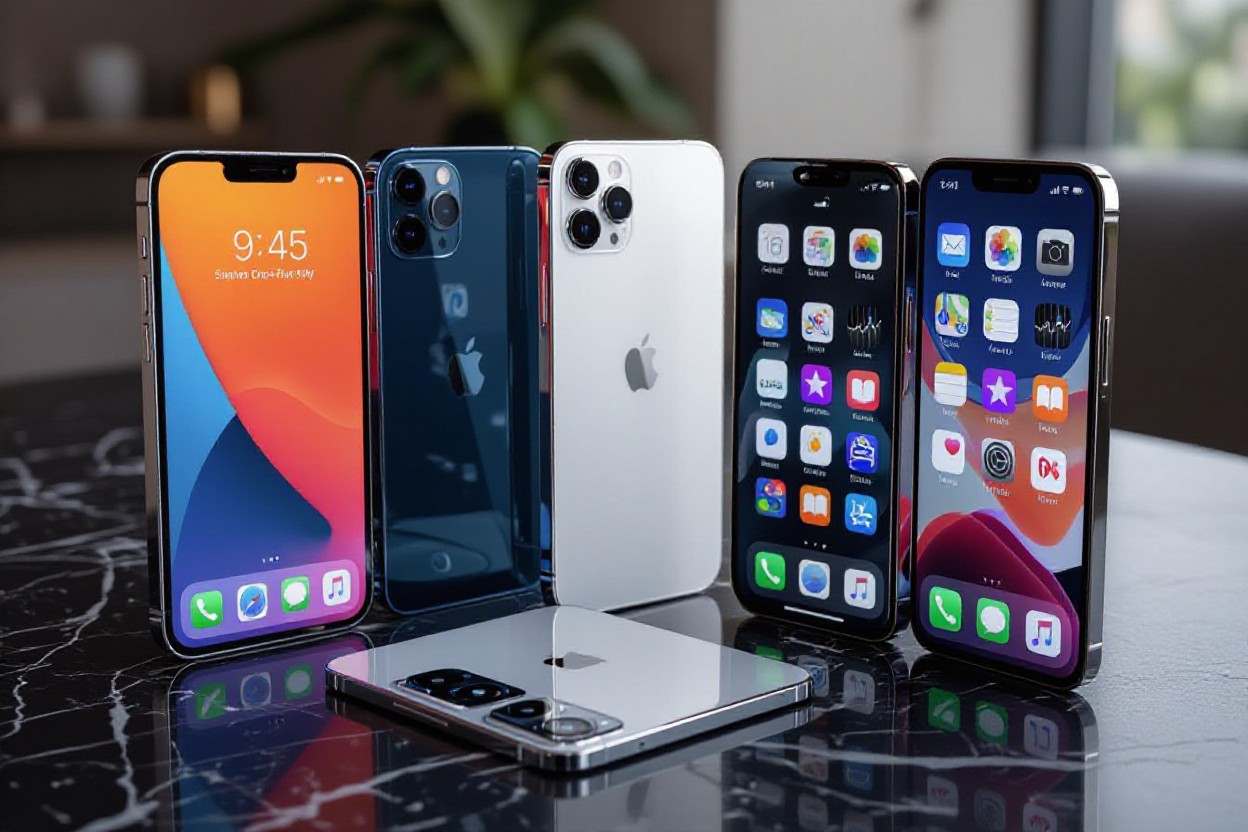
You should expect the Apple iPhone 18 series to arrive in September 2026, marking a major step forward for on-device intelligence and imaging. Apple is rumored to center the lineup around a new A20 chip and upgraded hardware, delivering deep AI integration within iOS and a focus on photography and pro workflows that will change how you capture and edit content.
For you as a user, that means faster local processing, features that work offline, and smoother multitasking across apps in the Apple ecosystem, but it also raises trade-offs: improved performance can increase power draw and thermal load, and more on-device AI can create new vectors for software vulnerabilities if updates aren’t handled promptly.
New A20 chip
The A20 chip is expected to bring a much more capable NPU and dedicated AI hardware, giving you powerful on-device AI for tasks like real-time language processing, advanced photo and video edits, and smarter system services without constant cloud dependence. You should see notable gains in both raw CPU/GPU speed and specialized AI throughput compared with prior chips, which will make heavy tasks feel instantaneous.
In practical terms, the A20 will let apps run sophisticated models locally for privacy and latency benefits, but you should be aware that developers may push large local models to your device—increasing storage use and potential battery impact. Keeping your software updated will be important to mitigate any emerging security or stability issues tied to complex on-device models.
Pro-level camera sensors
Apple’s Pro models are expected to adopt significantly larger and more advanced sensors, giving you better low-light performance, expanded dynamic range, and cleaner high-ISO images; this will be most noticeable when shooting night scenes and high-contrast subjects. Combined with on-device AI processing, these sensors should improve detail recovery, compute-driven HDR, and subject segmentation for portrait and pro editing tools.
Video capabilities will likely get a boost too, with higher-quality cinematic modes, improved stabilization, and extended telephoto reach for creative framing; however, you should plan for larger file sizes and greater storage demands when shooting high-resolution or ProRes footage.
More technically, the Pro-level setup may use stacked sensors, larger pixel sizes, and advanced pixel binning to maximize light capture while pairing with computational multi-frame algorithms—so you, as a photographer or creator, get cleaner detail and more editing latitude. Expect improved optical stabilization, faster autofocus, and potentially a periscope-style tele lens for longer true optical zoom; these hardware advances, combined with AI-driven processing, represent the biggest practical upgrade for image quality but also increase the importance of storage and thermal management on your device.
Apple’s First Foldable iPhone
You should expect Apple’s first foldable to arrive as a premium, polished entry into a market you may already be watching closely; leaks point to a mid-to-late 2026 launch with a focus on presenting a truly seamless main display. If Apple follows the rumors, the device will emphasize a refined hinge and materials that make the folded device feel like a single, high-end product rather than a prototype — a durable hinge and an uninterrupted display will be the namesake strengths you notice first.
For your day-to-day use, this means a phone that transforms into a near-tablet for productivity, media, and multitasking while still fitting into pockets when folded. Expect deep iOS-level optimization and on-device AI to smooth transitions between folded and unfolded modes, though you should also brace for a premium price and potentially higher repair costs compared with traditional iPhones.
Fold style design
Apple appears to be pursuing a book-style fold that opens to a larger, tablet-like canvas while keeping a usable outer display for quick tasks; for you, that will translate into a familiar tablet experience without carrying two devices. The design focus will likely be on making the hinge feel precise and stable, delivering minimal visible crease, premium materials, and a refined mechanical action that aims to set a new standard for foldables.
There are trade-offs you should weigh: a fold-style device will be thicker and heavier when closed, and hinge and seal engineering remain potential weak points for long-term durability and dust resistance. If you prioritize compactness and one-handed use, be aware that increased thickness, weight, and potential dust ingress at the hinge are real considerations.
Under-display front camera
One of the headline features you’ll likely see is an under-display front camera designed to create a truly uninterrupted main screen, hiding the selfie lens beneath the pixels so the display reads as a single surface. The upside for you is a far more immersive viewing area and cleaner design; the downside is that under-display optics often require software correction and clever hardware to match visible-camera clarity.
Apple will probably combine a denser pixel matrix, local display dimming, and advanced on-device image processing to improve clarity and reduce artifacts, but image quality—especially in low light—may still lag behind a traditional punch-hole or notch camera. For everyday video calls and selfies you should see solid results, though pro-level selfie detail might be a step behind.
Beyond image quality, the under-display approach affects authentication and app behavior: Apple will need to either integrate Face ID under the panel or retain separate sensors, so Face ID integration and privacy/security implications are important to watch; you can also expect software fixes that compensate for optical limitations, ensuring most apps and features work smoothly with the hidden camera.
Google Pixel 11 Series
You can expect the Google Pixel 11 Series to double down on what defines Pixel flagships: computational photography, tight Android integration, and on-device intelligence. The Pixel 11 and Pixel 11 Pro will likely showcase bigger camera sensors, refined optics, and a software layer that makes complex edits and smart suggestions feel instantaneous, putting advanced creativity and speed directly in your hands.
With an October 2026 release window, the series is positioned to highlight Google’s AI leadership for the year; on-device AI and deeper OS-level assistants will be selling points, while you should weigh potential trade-offs in background processing and data handling that could pose privacy and security risks.
Tensor G6 chip
The Pixel 11 lineup will be built around the Tensor G6, a next-gen SoC focused on massive on-device AI throughput rather than just peak CPU benchmarks. You’ll notice faster real-time photo enhancements, low-latency speech processing for the Assistant, and more efficient generative tasks that keep sensitive work local to the device.
Performance gains are expected across AI workloads, imaging pipelines, and power efficiency, but higher sustained AI loads may affect thermals and battery life, so you should expect aggressive power management and occasional throttling under prolonged heavy use.
- Improved neural engine for real-time generative editing
- Dedicated audio and vision accelerators for low-latency Assistant responses
- Optimizations for battery-aware AI tasks to balance performance and endurance
| Tensor G6 key specs | |
|---|---|
| Neural architecture | Multi-core NPU tuned for generative models |
| Performance focus | On-device AI, imaging, and low-latency ML |
| Energy profile | Improved efficiency with dynamic power scaling |
| Potential drawback | Thermal throttling under sustained AI loads |
Advanced AI integration
Google will push AI beyond features into the experience: your Pixel will proactively assist in composing messages, editing photos and video with generative fills, and summarizing calls or meetings. These capabilities mean you’ll get more done on-device, with faster, context-aware results that feel native to Android 17.
At the same time, the depth of integration raises governance questions; if you rely on continuous assistance or background inference, you should be aware of how data is processed and stored, since those choices create both powerful conveniences and potential privacy exposures.
The Advanced AI integration will also let you customize model behavior and latency vs. quality trade-offs, so you can prioritize speed for conversational tasks or image fidelity for creative edits; this flexibility gives you control but requires you to make informed settings choices to avoid unexpected data flow.
- Generative photo/video editing with local model inference
- Proactive Assistant with contextual suggestions across apps
- Configurable privacy and performance modes to match your needs
| Advanced AI features overview | |
|---|---|
| Generative editing | On-device fills, style transfers, and auto-enhancements |
| Proactive Assistant | Contextual prompts, summaries, and workflow suggestions |
| User control | Settings to limit cloud sync and adjust latency/quality |
| Biggest implication | Greater privacy when models run locally; higher convenience but watch for data-sharing defaults |
Samsung Galaxy Z Fold 8
You can expect the Galaxy Z Fold 8 to arrive around July or August 2026, positioned as Samsung’s refined flagship foldable. Rumors point to a thinner, lighter design, a much less visible crease and the same powerful Snapdragon silicon found in the S26 series, all aimed at making the Fold feel like a true phone-and-tablet hybrid.
Those changes should make the device more comfortable for day-to-day use, but you should be aware that foldables still carry trade-offs: hinge longevity and screen durability remain areas to watch, and slimmer chassis choices can sometimes mean compromises in battery capacity or thermal headroom.
Thinner, lighter design
A thinner, lighter Fold 8 will make it easier for you to use the device one-handed and slip it into pockets without the bulk of earlier models. The design push is likely focused on a refined hinge and lighter materials so the device feels less like a tablet when folded and more like a regular phone in your hand.
While that is a clear win for portability and daily comfort, the trade-off could be reduced battery size or higher temperatures under sustained load, and those are practical concerns you’ll notice if you push the hardware with gaming or heavy multitasking.
Integrated S Pen slot
Samsung is reportedly planning an integrated S Pen slot—likely on an Ultra variant if that model exists—so you can carry the stylus without an external case. That integration would upgrade the Fold into a true productivity tool, letting you jot notes, edit documents and navigate precise UI elements with the convenience of an on-board pen.
However, there are risks to be aware of: storing a pen inside a foldable chassis can complicate sealing for water and dust resistance and improper use or a loose pen could scratch the inner display, so how Samsung engineers the storage mechanism will matter a great deal for long-term durability.
More details on the S Pen slot point to a magnetic or recessed housing that could also house charging contacts for an active stylus; it may be limited to an Ultra model and could affect repairability or internal component layout, so if you rely on an integrated pen for work, check the exact feature list and serviceability before you commit.
To wrap up
Taking this into account, you should expect 2026 to be defined by aggressive on‑device AI and refined foldable hardware: the Samsung Galaxy S26 Ultra looks set to lead Android with a major AI jump, a brighter, more color‑accurate display and faster 60W charging; the iPhone 18 series will push on‑device AI via a likely A20 chip and deeper iOS integrations; Apple’s first foldable aims for a seamless, premium experience with an under‑display camera and a durable hinge; the Google Pixel 11 series will foreground generative AI and a more proactive Assistant on Tensor G6; and the Galaxy Z Fold 8 will refine the foldable formula with a thinner profile, a reduced crease and possible integrated S Pen.
You should choose based on priorities: pick Apple for tight hardware‑software integration and ecosystem benefits, Samsung’s S26 Ultra or Z Fold 8 for top Android performance and foldable versatility, or the Pixel 11 if exclusive AI imaging and Assistant features matter most; wait for final benchmarks, camera samples, battery figures and hinge durability reports before committing to a purchase.