Sony a7 V review: E-mount users get their own do-it-all powerhouse Review: Better Than the Competition?

Sony’s A7 series has long been the Swiss Army knife of full-frame mirrorless cameras – capable, versatile, and packed with pro-grade features at a (relatively) accessible price. But in 2025, the competition isn’t sleeping. Canon’s EOS R6 Mark III and Nikon’s Z6III have raised the bar for autofocus and speed, while Panasonic’s Lumix S1II leans hard into hybrid video. Enter the Sony a7 V: not just an evolution of the A7 IV, but a serious leap forward that aims to reclaim Sony’s throne as the go-to all-rounder for hybrid shooters. With a faster sensor, smarter AI processing, and near-A1-level performance squeezed into a familiar chassis, it’s clear Sony isn’t playing catch-up – it’s setting the pace.
The Look & Feel
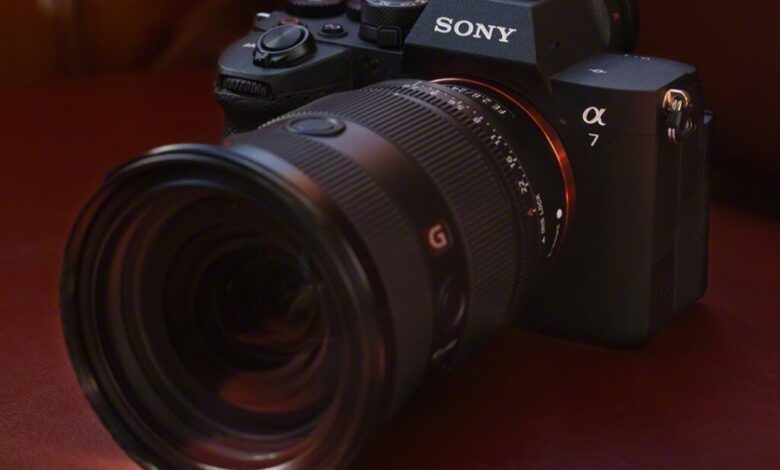
Outwardly, the a7 V looks nearly identical to its predecessor – same magnesium alloy build, same weather-sealed design, same button layout that Sony shooters know by heart. At 130.3 x 96.4 x 82.4mm and 695g (with battery and card), it’s slightly heavier than the A7 IV but still compact enough for all-day carry. The grip is deeper and more contoured, offering better purchase – though winter glove users might still find fingers brushing against wide lenses.
What’s new? A redesigned 4-axis multi-angle LCD (up from the A7 IV’s tilt-only screen) makes overhead and waist-level shooting far more practical. Two USB-C ports replace the old USB-C/micro-USB combo, enabling simultaneous power and data transfer – great for tethered shooting or long timelapses. And yes, the full-size HDMI port is a welcome upgrade over the micro-HDMI found on earlier models.
Handling feels instantly familiar to anyone who’s used a recent Sony E-mount body. Menu navigation remains dense but logical, and the dual control dials + customizable buttons offer plenty of tactile control. One gripe: the shutter release is *too* sensitive – accidental bursts at 30fps are frustratingly easy. Reassign AF-On to handle focusing instead, and you’ll avoid unwanted gallery clutter.
Can It Shoot?
- Stills: The 33MP partially stacked BSI CMOS sensor delivers crisp, detailed images with excellent dynamic range. Even at ISO 6400, noise is well-controlled, and the extended range up to ISO 204,800 (though best avoided) gives low-light shooters real flexibility.
- Speed: 30fps with full AE/AF tracking (electronic shutter) is game-changing. Pre-capture mode buffers up to 1 second of action before you fully press the shutter – perfect for capturing that perfect wingbeat or goal-line moment. Buffer depth is solid: 185 JPEGs or 85 RAW files in a single burst.
- Autofocus: 759 phase-detection points covering 94% of the frame, working down to -4EV, make this one of the most reliable AF systems on the market. Real-time Eye AF for humans, animals, and birds is near-flawless, though third-party lens support (especially from Chinese brands like Viltrox) remains hit-or-miss – a growing pain point for E-mount users.
- Video: 4K60p 4:2:2 10-bit internally, with 4K120p in Super35 crop mode. It’s clean, sharp, and great for most creators. But no open-gate recording, no internal RAW, and max 4K resolution feel like missed opportunities at this price – especially when rivals offer 6K or anamorphic modes.
- Stabilization: 7.5 stops (center) of IBIS is class-leading. Handheld video at 1/15s? Totally viable. Pair it with OSS lenses, and you’ve got gimbal-free smoothness.
Comparison: Sony a7 V review: E-mount users get their own do-it-all powerhouse vs Rivals
At $2,899 body-only, the a7 V sits squarely between the Canon EOS R6 Mark III ($2,499) and Nikon Z6III ($2,296), while undercutting the Panasonic Lumix S1II ($3,197). On paper, all four are formidable – but the a7 V pulls ahead in key areas:
- Resolution: 33MP beats the Canon (24MP) and Nikon (24MP), matching Panasonic. Great for cropping or large prints.
- Burst Speed: 30fps eclipses Canon’s 12fps (mechanical) and Nikon’s 14fps. Only the Sony A9 III and A1 II go faster – but cost twice as much.
- IBIS: 7.5 stops tops Canon’s 8 stops (claimed) and Nikon’s 8 stops – but real-world tests show Sony’s implementation is exceptionally smooth.
- Video: While Panasonic offers open-gate and Canon has better codecs, Sony’s 7K oversampled 4K looks stunning, and the 4K120p crop is usable for slow-mo.
- Battery Life: NP-FZ100 delivers 630 shots (EVF) or 750 (LCD) – outlasting Canon and Nikon by a healthy margin.
Where it lags? Video purists will miss 6K/open-gate, and CFexpress Type A cards (required for max performance) add cost. But for hybrid shooters who prioritize stills *and* video without breaking the bank, the a7 V strikes a rare balance.
Should You Upgrade?
High-resolution 33MP sensor
30fps burst with pre-capture
Best-in-class IBIS (7.5 stops)
Excellent battery life
Familiar, ergonomic design
No open-gate or 6K video
Aggressive JPEG noise reduction
CFexpress Type A adds expense
Third-party lens AF inconsistency
Verdict: If you’re coming from an A7 IV, the jump to 30fps, better IBIS, and improved video makes this a compelling – if pricey – upgrade. For Canon R6 II or Nikon Z6 II users, the a7 V offers superior resolution, speed, and stabilization. But if your work leans heavily into cinematic video (anamorphic, RAW, open-gate), consider the Lumix S1II or wait for Sony’s next V-log monster.
Bottom line: The a7 V isn’t just another incremental update – it’s Sony’s answer to the hybrid era. It’s faster, smarter, and more capable than ever. While not perfect, it’s arguably the best all-in-one E-mount camera since the A1… and at a fraction of the cost.
Tags: Sony a7 V, Sony mirrorless, full-frame camera, 33MP camera, 4K120p video, 30fps burst, IBIS stabilization, E-mount lenses, hybrid camera, Canon EOS R6 Mark III, Nikon Z6III, Panasonic Lumix S1II, Bionz XR2, CFexpress Type A