I Swapped My Old Device for the Razer Blade 16 Laptop Review for Gamers and Creators (2026): My Experience

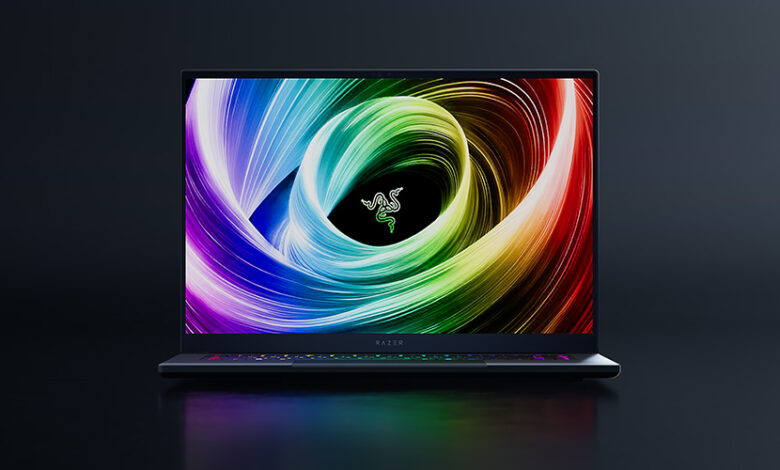
For years, I juggled two machines: a bulky desktop for rendering 4K timelines and a thin ultrabook for travel. When Razer announced the 2026 Blade 16 with an RTX 5090 and AMD’s Ryzen AI 9 HX 370, I took the plunge. Could one laptop finally replace both? After three weeks of gaming marathons, video exports, and coffee-shop editing sessions, here’s my honest take.
Unboxing & Aesthetics & Durability

The Blade 16 arrives in minimalist black packaging that feels more like Apple than a gaming brand. Lifting the lid reveals the signature matte-black CNC aluminum unibody – cool to the touch and fingerprint-resistant. At just 0.69 inches thick and 4.72 pounds, it slips into my backpack without strain, yet feels indestructible. The glowing green Razer logo is subtle enough for client meetings but pulses with Chroma RGB flair when I’m deep in Elden Ring.
Ports are thoughtfully placed: two USB4 Type-C (perfect for my external SSD), three USB-A, HDMI 2.1, and even a UHS-II microSD reader – a creator’s dream. The only gripe? The centered keyboard lacks a numpad, and the oversized trackpad, while glass-smooth, occasionally registers accidental palm taps during intense gameplay.
24 Hours Later: Display Quality
The 16-inch OLED panel stopped me in my tracks. With a 2560 x 1600 resolution, 240 Hz refresh rate, and Calman Verified color accuracy, it’s a dual threat. In Alan Wake 2, shadows in the Pacific Northwest forest were pitch-black, yet Saga’s flashlight revealed every leaf and rusted sign with lifelike vibrancy – thanks to that 1M:1 contrast ratio. Colors popped without oversaturation, and motion blur vanished during fast-paced firefights in Battlefield V.
As a video editor, I calibrated it for DaVinci Resolve. Skin tones stayed natural, and HDR previews matched my studio monitor. The only caveat? OLED burn-in risk means I avoid static UI elements during long renders – but for a laptop this portable, it’s a worthy trade-off.
One Week Later: Performance Test
This is where the Blade 16 shines – and stumbles slightly. The RTX 5090 (24GB GDDR7, 160W TGP) delivers desktop-tier muscle. In Cyberpunk 2077 at QHD+ with ray tracing on and DLSS Auto, I averaged 87 fps – smooth enough for competitive play. The Witcher 3 hit 141 fps (DX11), and Horizon Zero Dawn cruised at 138 fps. But crank up ray tracing in DX12 titles like The Witcher 3, and frame rates dip to 39–64 fps, revealing the AMD Ryzen AI 9 HX 370’s 28W limitation. It’s not a bottleneck for most games, but CPU-heavy scenarios (think 1080p esports or complex simulations) show the constraint.
Creatively, it’s a beast. Handbrake transcoded a 4K video to 1080p in 3:05 – faster than Alienware’s equivalent but slower than bulkier rigs like the Aorus Master. The 2TB Gen4 SSD swallowed my 8K footage libraries, and 32GB of LPDDR5X-8000 RAM handled 50+ Chrome tabs alongside Premiere Pro without hiccups. Thermals stayed impressive too: the redesigned vapor chamber and Honeywell PTM7958 gel kept surface temps below 40°C even during hour-long renders.
Battery life? Surprisingly solid for a gaming laptop. At 30% brightness, I got 6.5 hours of light work (docs, Zoom, browsing) – enough for a cross-country flight. Gaming drains it fast (2 hours max), but that’s expected with this GPU.
The Bottom Line
- Score: 9/10
- Best for: Gamers and creators who prioritize portability without sacrificing flagship performance.
- Not for: Budget buyers or those needing max CPU power for 1080p esports.
Pros & Cons
- Stunning OLED display: 240 Hz, vibrant colors, perfect for gaming and color-critical work.
- RTX 5090 power: Handles ray-traced AAA titles and 4K editing with ease.
- Sleek, durable design: Thin, lightweight, and built like a tank.
- Creator-friendly ports: microSD reader, USB4, and HDMI 2.1 cover all bases.
- Efficient cooling: Runs cool and quiet under load thanks to the vapor chamber.
- Premium price: $4,499 is steep, even for these specs.
- CPU bottleneck: The 28W Ryzen chip limits performance in CPU-intensive tasks.
- Trackpad quirks: Feels slightly cheap and oversized for precise control.
- Average speakers: Six drivers but lack volume and depth for media consumption.
Tags: Razer Blade 16, RTX 5090 laptop, AMD Ryzen AI 9 HX 370, OLED gaming laptop, creator laptop 2026, thin gaming laptop, high-end laptop review, portable workstation, 240Hz display, vapor chamber cooling, Windows 11 gaming, 4K video editing laptop, premium gaming notebook, Razer Chroma keyboard, mobile content creation