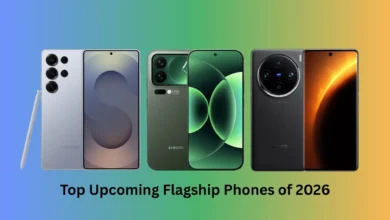
Last December, my three-year-old flagship finally gave up – battery swelling, random reboots, the whole sad saga. Instead of splurging on another $1,200 phone, I decided to test the mid-range waters in early 2026. Spoiler: I haven’t looked back. Over the past month, I’ve rotated between five of the year’s most talked-about mid-tier Androids – the Google Pixel 9a, OnePlus 15R, Xiaomi 15T, Samsung Galaxy A56 5G, and Nothing Phone 3a Pro – using each as my daily driver with my actual SIM card. Here’s what surprised me, what disappointed me, and which one I’m keeping.
Unboxing & First Impressions

The first thing that struck me across all five devices was how premium they feel – especially for their price. The Pixel 9a’s matte polycarbonate back feels surprisingly luxe, while the OnePlus 15R’s aluminum frame and Gorilla Glass Victus 2 give it near-flagship vibes. Even the Nothing Phone 3a Pro, with its transparent back and Glyph lights, turns heads at coffee shops. Only the Samsung A56 feels a bit plasticky, though it’s also the lightest at just 167g.
Setup was seamless on all – Android 15 (or 16 on the S25 FE) runs smooth, and Google’s seven-year update promise on the Pixel 9a is a game-changer for longevity. The Xiaomi 15T’s HyperOS 2, however, took some getting used to – it’s feature-rich but cluttered compared to stock Android.
24 Hours Later: Is the Display Good?
Brightness and color accuracy varied – but not as much as you’d expect. The OnePlus 15R’s 6.78-inch ProXDR AMOLED hit 2,700 nits in direct sunlight, making outdoor scrolling effortless. The Pixel 9a’s display, while capped at 1,600 nits, uses Actua tuning to maintain color fidelity even under harsh light – a win for photographers. The Nothing Phone 3a Pro’s 3,000-nit OLED is gorgeous but suffers from slight oversaturation out of the box (easily fixed in settings).
Refresh rates were mostly smooth, though the Xiaomi 15T rarely sustained its 144Hz mode outside gaming – likely a battery-saving move. The Samsung A56’s 120Hz panel is crisp but lacks LTPO, so it drains faster during video playback.
One Week Later: Speed & Power
Performance surprised me most. The OnePlus 15R, powered by the Snapdragon 8 Gen 5, handled Genshin Impact at max settings without breaking a sweat – and stayed cool thanks to its vapor chamber cooling. The Poco F8 Pro (not officially released in the US yet) was even faster in benchmarks, but real-world gains were minimal unless you’re a hardcore mobile gamer.
The Pixel 9a’s Tensor G4 felt snappy for everyday tasks – messaging, photo editing, multitasking – but lagged slightly behind in sustained loads like 4K video rendering. Still, Google’s AI features (like live call translation and Magic Editor) ran locally and flawlessly. The Nothing Phone 3a Pro’s Snapdragon 7s Gen 3 is adequate for social media and light gaming, but don’t expect flagship-level speed.
Battery life? Ridiculous. The OnePlus 15R’s 7400mAh silicon-carbon cell lasted me 1.5 days with heavy use – and 80W charging topped it up in under 40 minutes. The Pixel 9a wasn’t far behind, easily clearing 30 hours on a charge. Even the slimmest phone here – the Galaxy A56 – delivered a full day and a half.
The Bottom Line
After a month of real-world testing, the Google Pixel 9a emerges as my top pick – not because it’s the fastest or flashiest, but because it delivers the most balanced, future-proof experience. Its camera outperforms rivals in color accuracy and low-light detail, battery life is class-leading, and seven years of updates mean it’ll stay relevant through 2033. If you prioritize raw power, the OnePlus 15R is unbeatable for $599. Design lovers should consider the Nothing Phone 3a Pro, while Samsung fans will appreciate the Galaxy A56’s clean One UI and useful AI tools.
Mid-range phones in 2026 aren’t just “good enough” – they’re genuinely excellent, often matching or exceeding last year’s flagships. My old phone didn’t just get replaced; it got outperformed.
Pros & Cons
- Pixel 9a: Best-in-class camera, exceptional battery, clean Android, 7-year updates
- OnePlus 15R: Flagship-level performance, massive battery, fast charging, bright display
- Nothing Phone 3a Pro: Unique design, solid telephoto lens, fresh software tweaks
- Samsung Galaxy A56: Lightweight, great main camera, useful AI features, long support
- Xiaomi 15T: Premium build, large AMOLED screen, strong performance
- Pixel 9a: Thick bezels, slow charging, no telephoto lens
- OnePlus 15R: No wireless charging, removed telephoto lens, plastic back
- Nothing Phone 3a Pro: Sluggish camera app, middling low-light performance
- Samsung Galaxy A56: Weak ultrawide camera, mediocre speakers, not great for gaming
- Xiaomi 15T: HyperOS feels bloated, inconsistent 144Hz refresh rate
Tags: best mid-range android phones 2026, pixel 9a review, oneplus 15r, xiaomi 15t, samsung galaxy a56, nothing phone 3a pro, android 15, mid-tier smartphones, battery life test, camera comparison, snapdragon 8 gen 5, tensor g4, long-term software support, value phones 2026, tech spurt review